
Chart 10-3 · 11 min
Pits, then juice
A read of this page, with the plate.
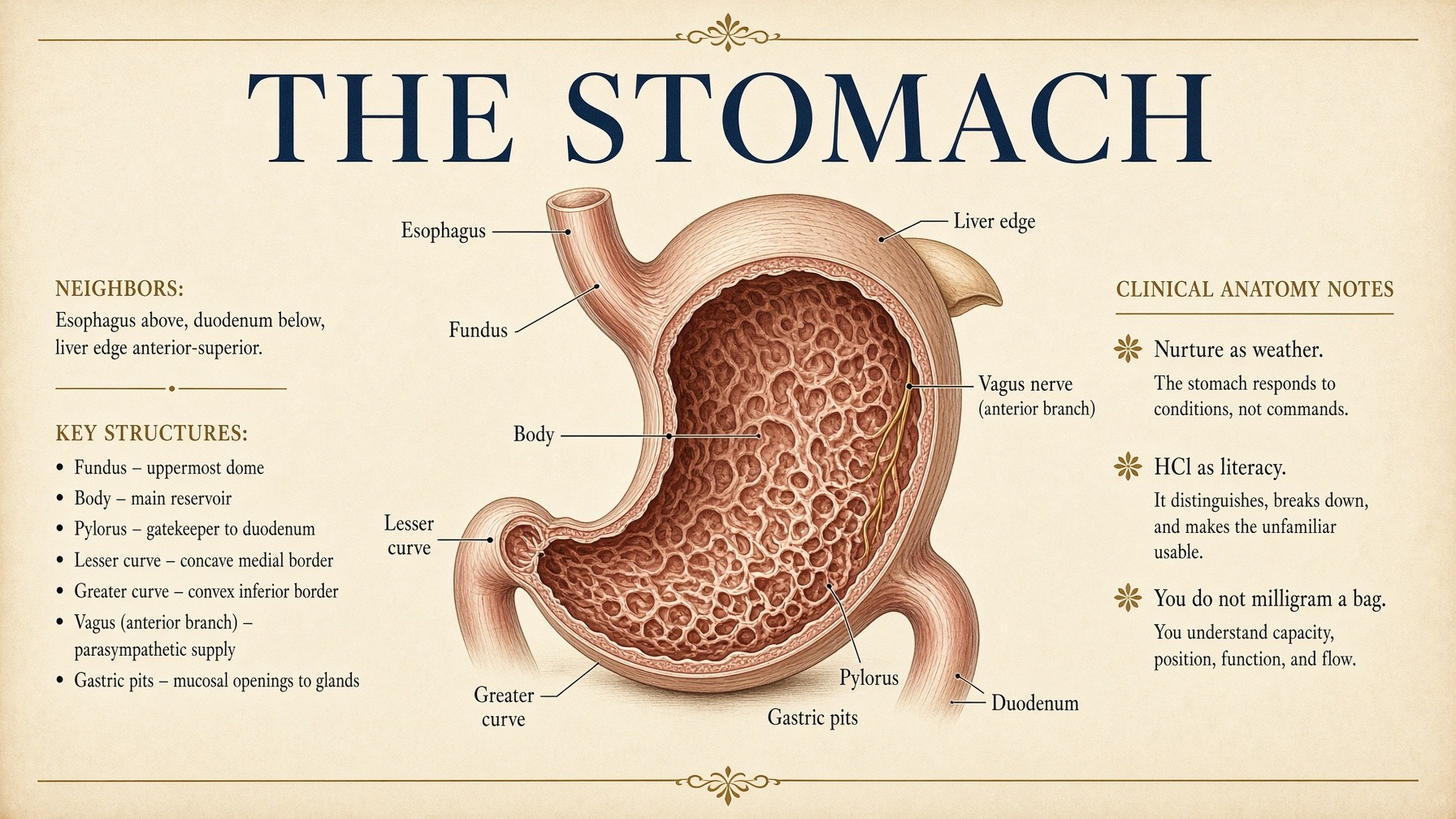
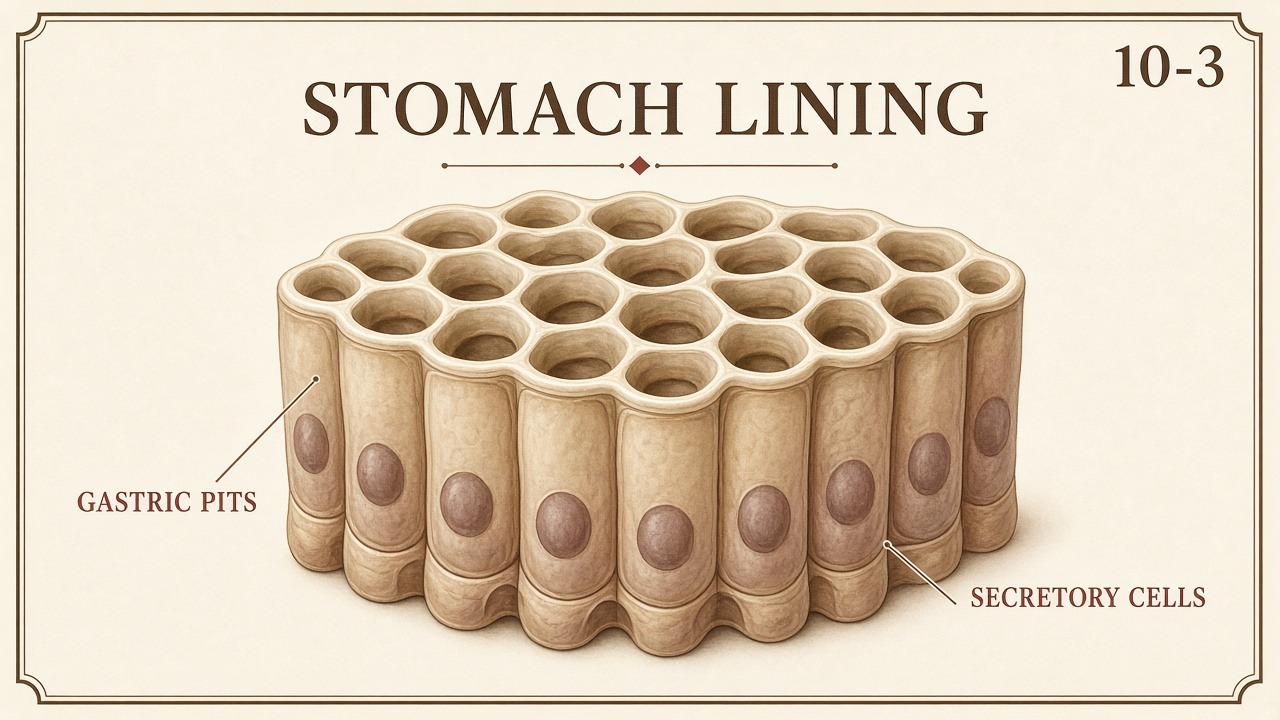
The wall is lined with thousands of pits. Three to seven gastric glands empty into the bottom of each. Very little absorption happens in the bag — water, alcohol, caffeine can cross. The work is churning protein with juice. Mucus-producing cells go first: a coat so acid and pepsin do not eat the wall that made them.
Where gastrin lands
The source sent gastrin down from the hypothalamus on the vagus. Gastrin is made by G cells in the antrum of the stomach. The vagus — parasympathetic, from the brainstem — stimulates those cells when food is in the room, even when it is smelled. Gastrin asks for more HCl, more pepsinogen, more intrinsic factor, and for histamine, which asks for more acid still. Keep Chart 1-1. Name the landing. Hypothalamus is not the factory.
Her voice, from the class.
Gastric pits → pepsinogen → juice
Practice
Smell something you actually like. Notice whether the bag answered before the mouth did. Journal the pause. Feeling, then the room.
Check
This hour teaches that gastrin is parked on:
- The hypothalamus as a gland that secretes it
- G cells in the antrum, stimulated by the vagus ✓
- The pancreas islet that answers a meal
G cells. Vagus still stands as the parasympathetic door. The source’s hypothalamus is revised.
You use mucus in the pit by:
- Parking mucus on lung because the trachea is nearby
- Asking whether the coat is first — then feeling, age, meridians if the lining is a feeling ✓
- Walking CCK so the gallbladder will hear
Mucus first. Then acid. Name the room. Then Chart 1-1.
This hour teaches that:
- Opening a chakra by squeezing it
- The wall is lined with thousands of pits. ✓
- Skip permission and invent the next board
The wall is lined with thousands of pits.
A true line on this hour:
- Collapsing two houses into one word
- The work is churning protein with juice. ✓
- A name that captures the whole sky
The work is churning protein with juice.
Pits, then juice — keep this:
- A replacement for the physician
- Hypothalamus is not the factory. ✓
- A cream you prescribe from the chart
Hypothalamus is not the factory.
Practice on this hour is to:
- Treating every hour as interchangeable production
- Smell something you actually like. ✓
- Skip the journal and invent a diagnosis
Method before bottle. Trace what the lesson names.
Chart 10-3 on this hour is used as:
- Squeezing the gate until it 'opens'
- Thousands of pits. Three to seven glands at the bottom of each. Mucus first. ✓
- A board you invent without her permission
Translator map — Chart 10-3. Not a prescription pad.
The lab on this hour is for:
- A graded exam that invents the next curriculum
- Feeling and naming what the lesson maps — journal, not a bottle ✓
- A prescription pad for the lab name
Lab is literacy. Not a dose from the yield.
A common mistake this hour corrects:
- A swap of clothes for the organ
- Mucus-producing cells go first: a coat so acid and pepsin do not eat the wall that made… ✓
- A dose you write from a yield
Mucus-producing cells go first: a coat so acid and pepsin do not eat the wall that made them.
You use this lesson by:
- Thyroxine from the medulla
- Three to seven gastric glands empty into the bottom of each. ✓
- Living against the tide on purpose
Three to seven gastric glands empty into the bottom of each.