
Chart 10-4 · three cells · 13 min
Purple, yellow, pink
A read of this page, with the plate.
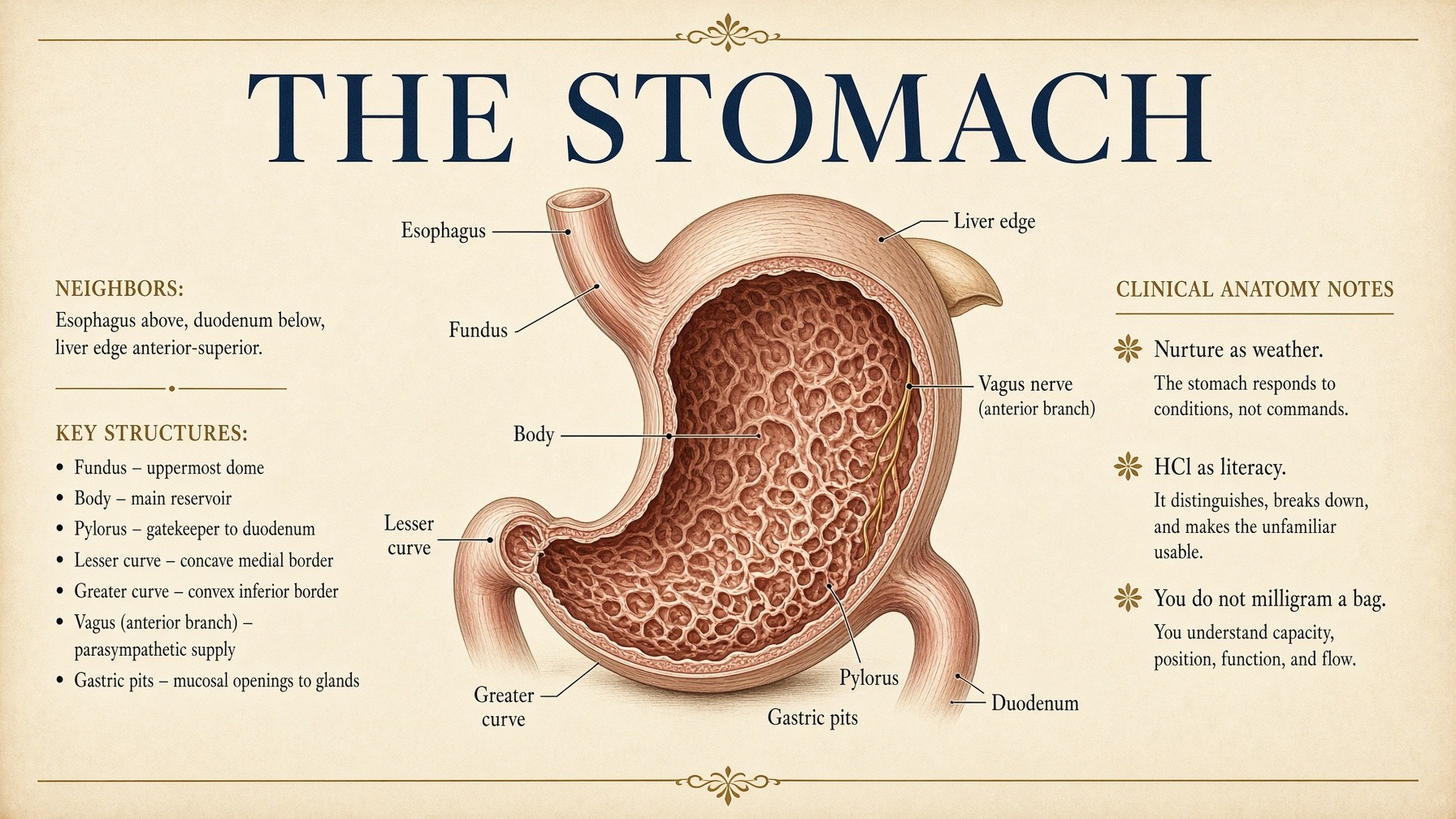
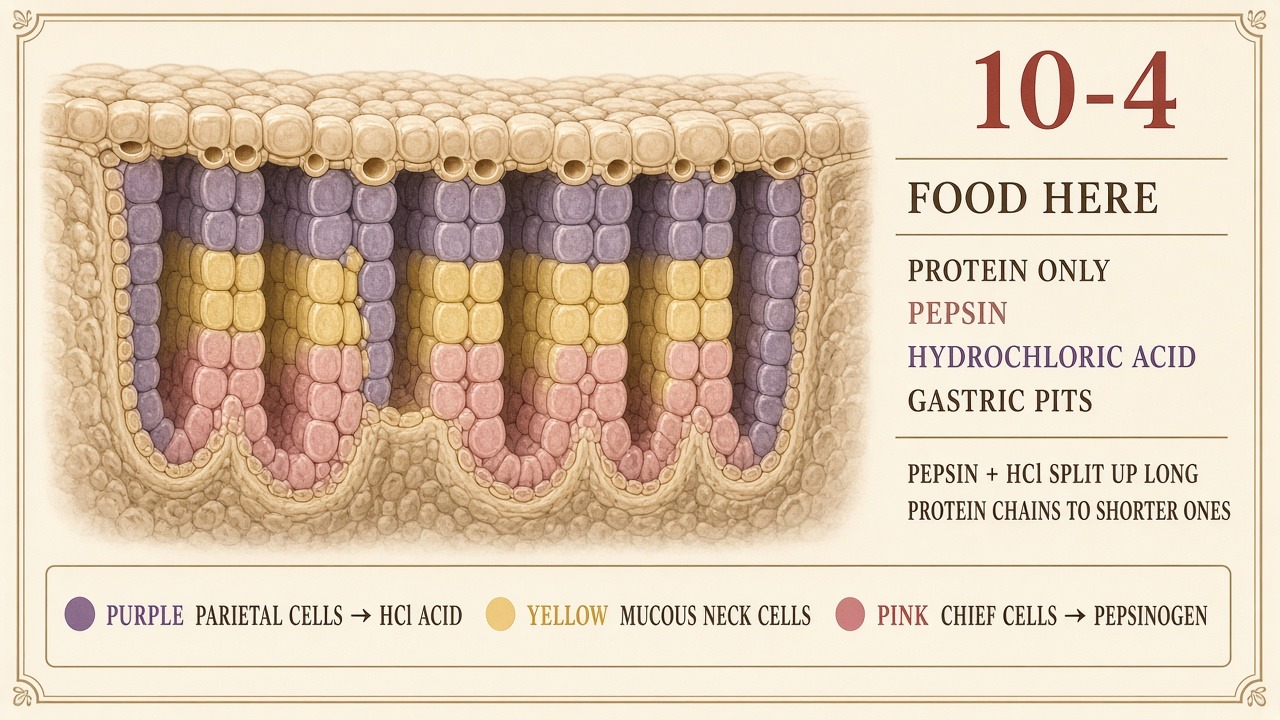
Parietal cells, purple: HCl and intrinsic factor. Stimulated by vagus and gastrin. Liters a day, as order of magnitude. Intrinsic factor is a protein that binds B-12 so it can travel to the last of the small intestine. That landing is ordinary physiology. Chief cells, pink: pepsinogen. In acid, pepsinogen becomes pepsin, a proteolytic enzyme. Pepsin cuts peptide bonds. Long chains become shorter ones.
Shorter here, one letter later
The board wrote that protein is cut until the chains are single amino acids. The Proteins sheet that arrived with this class stops the stomach at proteoses and peptones, and gives the rest to trypsin and chymotrypsin in the duodenum. Shorter here. One letter later. HCl is the bag’s acid. Pepsin is the bag’s scissors. You walk those names.
Her voice, from the class.
Yellow mucus, pink chief, parietal HCl
Practice
Look at 10-4. Name purple, yellow, pink out loud: acid, mucus, pepsinogen. Journal which of the three feels like the sentence in your field — as influence.
Check
This hour teaches that intrinsic factor is parked on:
- Chief cells, with pepsinogen
- Parietal cells, with HCl — so B-12 can reach the ileum ✓
- Acinar cells, with pancreatic amylase
Parietal. B-12 to the end of the small intestine. The landing stands.
You use pepsin in the work as:
- The enzyme that finishes protein to single amino acids in the bag
- The cut of long chains shorter — proteoses and peptones — then feeling, age, meridians if the protein room is a feeling ✓
- The scissors that clip the ester after bile is soap
Shorter here. One letter later. The Proteins sheet already knew.
Purple, yellow, pink — keep this:
- Write a dose so the feeling looks finished
- That landing is ordinary physiology. ✓
- A tourist empty-mind contest
That landing is ordinary physiology.
Practice on this hour is to:
- Living against the tide on purpose
- Name purple, yellow, pink out loud: acid, mucus, pepsinogen. ✓
- Skip the journal and invent a diagnosis
Method before bottle. Trace what the lesson names.
Chart 10-4 on this hour is used as:
- Proof of supernatural status
- Protein only. Pepsin and HCl split long chains shorter. Single amino acids wait for the… ✓
- A cream dose from the caption
Translator map — Chart 10-4. Not a prescription pad.
The lab on this hour is for:
- A graded exam that invents the next curriculum
- Feeling and naming what the lesson maps — journal, not a bottle ✓
- A prescription pad for the lab name
Lab is literacy. Not a dose from the yield.
"Purple, yellow, pink" here is best treated as:
- A tourist collection of special experiences
- Parietal cells, purple: HCl and intrinsic factor. ✓
- A rigid diagnosis tool that replaces sleep
Train with the map. Do not invent a second sky.
The skilled response here is:
- Treating every hour as interchangeable production
- Stimulated by vagus and gastrin. ✓
- Invent a colorful story so the session feels complete
Stimulated by vagus and gastrin.
Keep this from the body of the hour:
- A board you invent without her permission
- Liters a day, as order of magnitude. ✓
- Opening a chakra by squeezing it
Liters a day, as order of magnitude.
You use this lesson by:
- A swap of clothes for the organ
- In acid, pepsinogen becomes pepsin, a proteolytic enzyme. ✓
- A dose you write from a yield
In acid, pepsinogen becomes pepsin, a proteolytic enzyme.