
Class 31 Lab · 14 min
Ask the rooms
A read of this page, with the plate.
Name. Permission. Alone in the field. Age. Then the class asks — and only then the work.
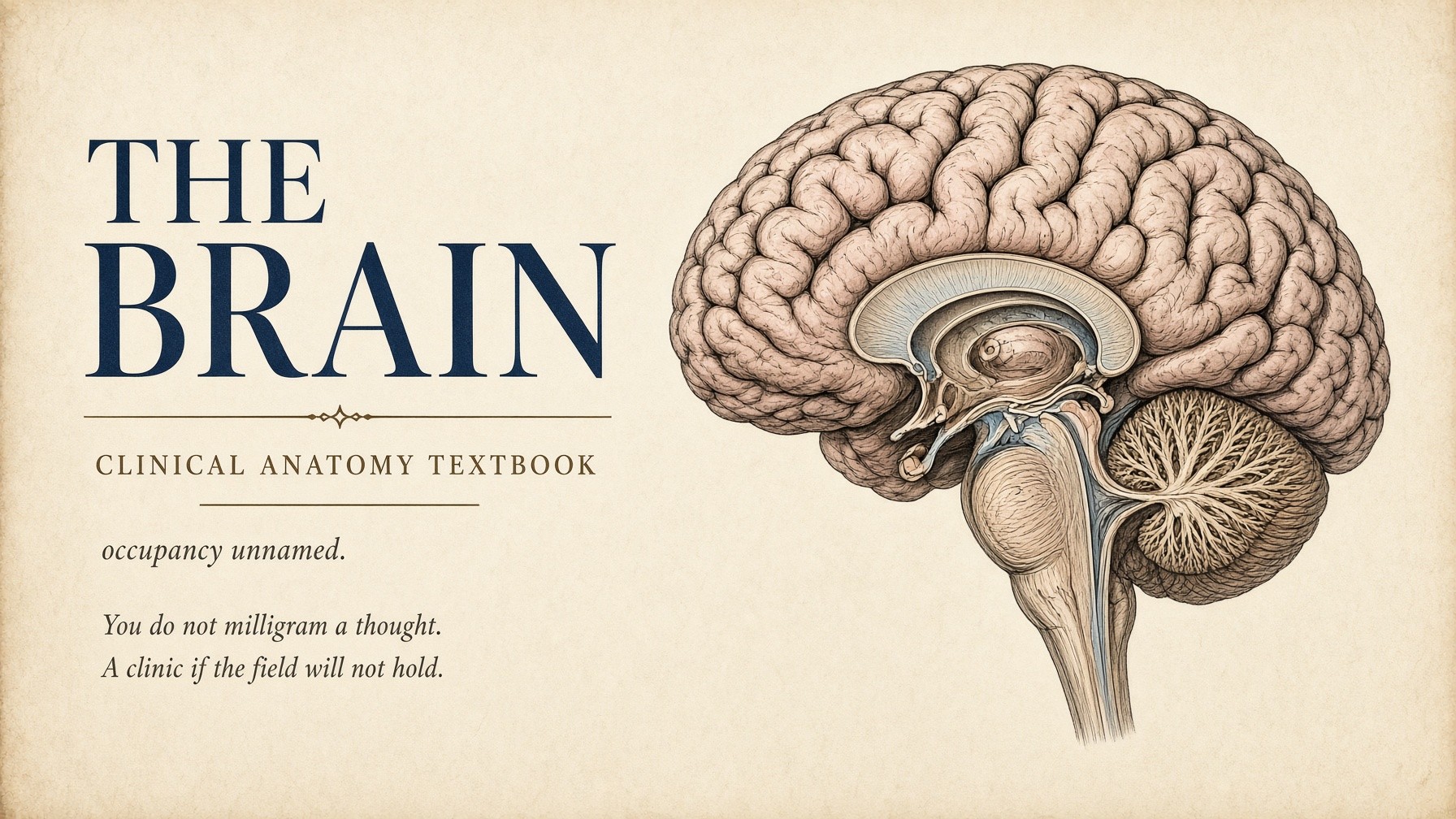
Course 31 closes in the body, not the notebook. Class 31 put the asks in order for brain stem, limbic, cerebrum. Every later session still starts with name, permission, alone in the auric field, and stated age. Strong holds; yield gives. Show means hold the name — literacy, not a dose you invent.
The opening
Is this the name? Is it all right if we talk with you? Are you all alone in your auric field? Are you the age you stated? These are not small talk. A yield on permission is a stop. A yield on alone is a cord or a split — you do not run a meridian through occupied space. A yield on age is presenting age, not a lie.
The sequence
Class 31: Brain (Brainstem, Limbic Brain and Cerebrum) Lab
- 1. Is it okay if we talk to you about the biofield of your brain?
- 2. Are your neurons operating optimally?
- 3. If not, ask if they are blocked by MSG or aspartame. (If yes, offer NAC (N-Acetyl Cysteine) to remove and restore.)
- 4. Are the myelin sheaths of your axons healthy and working optimally? (If not, suggest
Sphingolin or DPT-tox.)
- 5. Has the energy field of your cerebrum contracted as a result of an injury? Or a toxic substance? Or an out-of-date limiting idea? Or biofield possession?
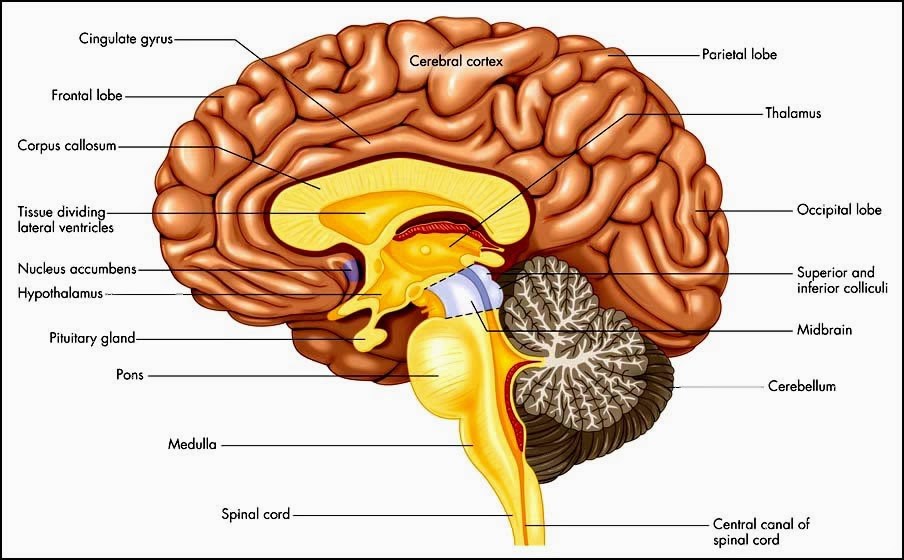
- 6. Is your corpus collosum allowing perfect communication between the two halves of your brain?
- 7. Do you see your frontal lobe? (touch top/front) Is this where you make plans, decisions, carry a sense of purpose? (If not optimal, check marijuana damage.)
- 8. Do you censor outrageous behavior in your frontal lobe? Is this where you balance your desires to please others with the desire to stand up and take a risk?
- 9. Can you see your parietal lobes? (touch side/back of head) Is this where you assemble letters into words? Words into thoughts?
- 10. Touch head above ears (temporal lobes): Is this the place concerned with hearing? With shape and sound memory? With dream pictures? With the memory of sequences?
- 11. Do the temporal lobes play a part in memory retrieval? Retrieving the right words?
- 12. Can you see your occipital lobe? (touch back of head) Is this where you receive visual impressions?
- 13. Is your medulla oblongata (touch the back of the head) in your brainstem working well for biting? (muscle test each one) chewing? tongue reflexes, swallowing and coughing? Are you doing those things exactly the way you'd like? Do you bite your tongue too often, or have any problems with swallowing?
- 14. Are you synthesizing norepinephrine in the locus ceruleus just the way you'd like?
- 15. Is the reticular formation working to signal danger and wake you up?
- 16. Is the raphe nucleus working to activate wide awake awareness? Are you able to wake up when you want?
- 17. Are the pons acting as a bridge of communication between the cerebellum and the spinal cord concerning balance and body position?
- 18. Are your pons monitoring your CO2 level, allowing you to breathe deeper when you need to release CO2?
- 19. Do your pons coordinating your eyeballs optimally? Are you able to read easily, moving your eyes back and forth across the page? (If not, check for a milk allergy.)
- 20. Can we talk to your limbic brain?
- 21. Can you see the amygdala? Is this where you fifirst experience uncensored emotions? Is this where you hold unresolved emotional experiences outside of time?
- 22. When the uncensored emotion is overwhelming, do you split out?
- 23. Are your uncensored feelings modulated in the frontal lobe of the cerebrum? Are you able to do this when you need to? (If client cannot moderate out-of-control feelings, check myelin sheath around brain and need for DPT-tox, Sphingolin, metals, allergies, esp. sugar.)
- 24. Can you see the limbic arches, the fornix, that encircles the thalamus? Is this where you scan experiences for similar experiences you've had before?
- 25. At the end of the fornix is the hippocampus. Is this where you hold your short-term memory?
- 26. Are you able to retrieve your memories as well as you'd like to?
- 27. Do you use glutamate to retrieve short-term memories? Do you have the right amount?
Are you able to synthesize it? (If not, check if there is enough germanium.)
- 28. Do you use acetylcholine to retrieve short-term memories? Do you have the right amount?
Are you able to synthesize it? (If not, ask about choline and acetyl from acetylCoA and if there is enough choline acetlytransferese to combine them.)
- 29. Can you see the mammillary bodies—at the smaller ends of the fornix? Do you store beliefs and agreements here?
- 30. Do you know where you hold long-term memories? In the fornix? In the temporal lobes?
- 31. Are your memories held in the brain tissue? Are your memories floating in the auric fifields around the brain? Are memories in the flffluids in the brain?
- 32. Do you need dopamine and acetylcholine for long-term memory retrieval? Do you have exactly the right amount? (If not, explore synthesis and reception, folic conversion, B6.)
- 33. Do you see the egg-shaped device tucked inside the fornix called the thalamus? Is this a sensory-sorter that allows you to focus on one sound or sight and disregard the peripheral?
- 34. Are you able to focus your attention exactly the way you'd like to? Do you have enough taurine to help you? (Check milk allergy, toxins.)
- 35. Can you see the fluid that bathes your spinal cord and brain?
- 36. Is your cerebrospinal fluid circulating freely?
- 37. Are the sphenoid bones in your face gently pumping fluid as you breathe? Your sacrum also?
- 38. Is the pH of your cerebrospinal fluid just right?
- 39. Is it too viscous? (Check minerals, Bs, fatty acids, emotional factors, muccopolysaccharides, balance of protein particles in blood?)
- 40. Is the biofield of your cerebrum exactly the way you'd like it?
- 41. Are your neurotransmitters working perfectly? (Synthesizing and releasing.)
- 42. Is the pH just right?
How to remove beliefs
x Determine what is the belief (verbalize this with client) x Draw it out with hands and replace with a positive "I" statement from client.
How you use the lab
On yourself first, or a consenting adult. Strong holds; yield gives. If a step says stop, you stop. Walk Kapel's numbered asks in order — do not invent missing steps. When the PDF shows a sample or ingredient, hold the name and ask; this academy does not invent milligram or dosing language. Ethics still holds after the last yes.
Practice
Walk the Class 31 lab on yourself. Journal one sentence: what the body said first, and whether you stopped anywhere.
Check
This Class 31 lab is about:
- Walking Kapel's numbered asks on brain stem, limbic, cerebrum — permission first ✓
- Inventing a new clinical protocol
- Skipping the opening four because the PDF is long
Use the PDF sequence. Topic: brain stem, limbic, cerebrum.
Talk / permission in this lab is:
- How the hour is asked — not a sixth decorative step ✓
- Optional if you already know the anatomy
- A dose
Is it all right if we talk with you?
Presenting age on this hour:
- Is asked; a yield is not a lie — the field may not be in the present tense ✓
- Is ignored after Class 1
- Is a milligram of years
Are you the age you stated?
When the PDF lists ingredients or samples for brain stem, limbic, cerebrum, you:
- Show / hold the name and ask — literacy, not a student prescription ✓
- Write a brand and a milligram from memory
- Skip occupancy
Kapel's list stays a list of questions.
After the last clean yes:
- Ethics still holds — you do not invent more work so the hour feels complete ✓
- You must finish every number on the page
- You prescribe what was shown
Stop inventing work.
The Class 31 lab opens with:
- A favorite color, a mantra, and a crystal grid
- Name, permission to talk, alone in the auric field, and stated age — then the class asks ✓
- A milligram list you write before the first yes
Every later ask belongs on that permission. Occupancy before the trace.
A yield on permission is:
- A suggestion to press harder
- A stop ✓
- A dose you write
You do not run a meridian through a no.
“Are you all alone in your auric field?” — a yield means:
- Talk louder so the field can hear
- There is company — a cord or a split — and you do not invent chemistry yet ✓
- The person has failed the course
Company in the field is not a channel problem. Check cords and splits first.
Show / hold a name in this lab means:
- Write a milligram and a brand
- Hold the name as a question — literacy, not a dose you invent ✓
- Skip permission because the PDF listed an ingredient
Kapel's list is asked. This academy does not invent dosing language.
If a step says stop, you:
- Skip it so the lab looks complete
- Stop. The field still holds after the last yes ✓
- Press harder until you find a problem
On yourself first. Strong holds; yield gives.