
Chart 39-7 · 12 min
First, do no harm
A read of this page, with the plate.
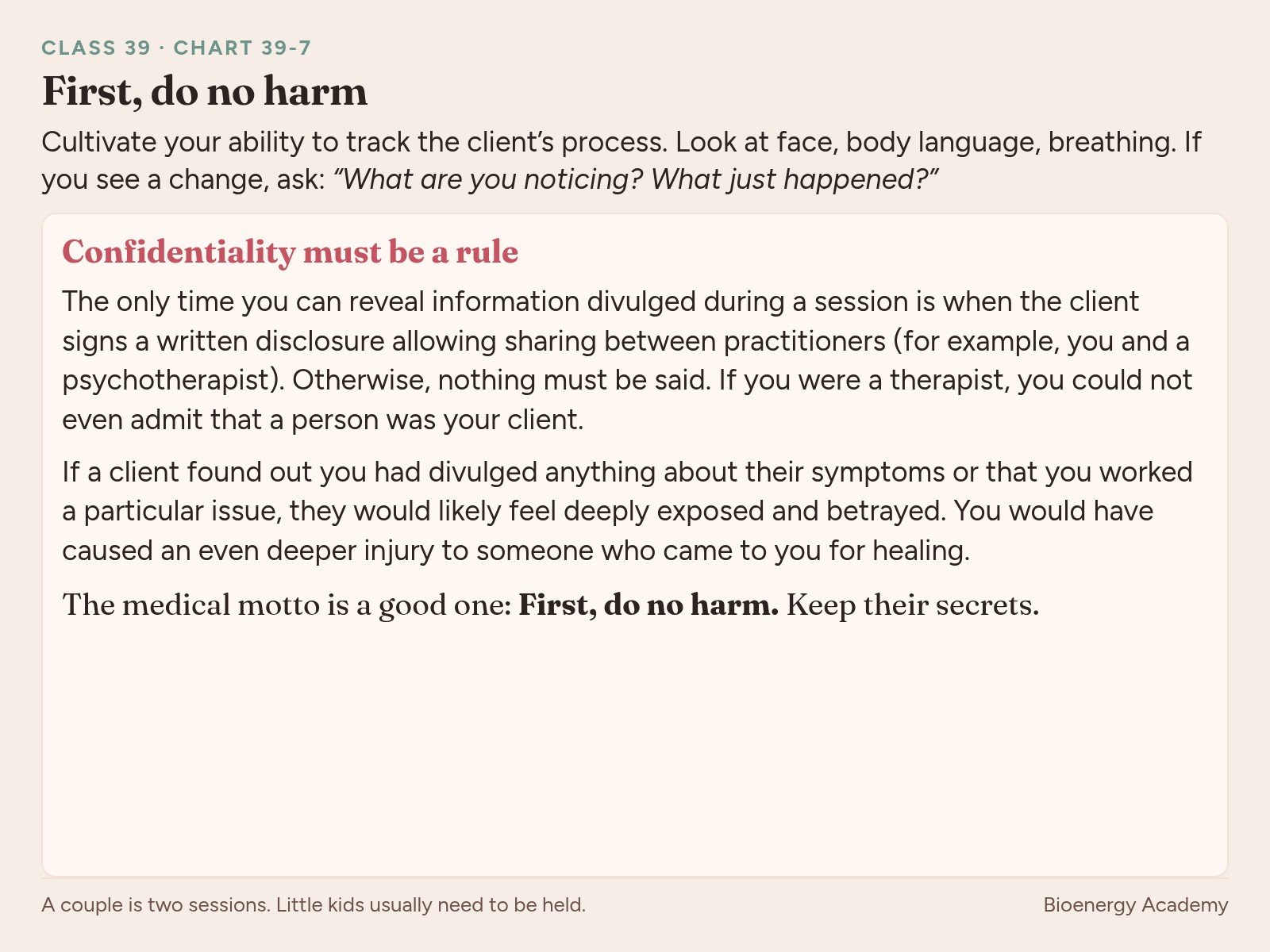
Confidentiality must be a rule. Nothing leaves the room unless they sign a paper that names the other practice. You do not even name that they came, if that is the keep. If a client found out that you had divulged anything, they would likely feel deeply exposed and betrayed. You would have caused an even deeper injury to someone who came to you for healing. The medical motto is a good one: First, do no harm. Keep their secrets. A couple is two sessions. Often it is better to have people come in without their spouse — they would be freer to discuss issues between them. Some people feel reassured to have their spouse there. Ask the body. If the visitor becomes intrusive and makes remarks, you must stop him. You need a private connection with the person on the table. Little kids usually need to be held. They don’t have to lie down on the table unless they want to — and they generally don’t want to. When the mother holds them, she is not going to skew the readings, because you can tell the kid’s biofield to project only its own personal vibration, and it will. Running meridians on a baby that is being held is tricky. It can be brief. You have to just think, OK, we’ve got field conditions, we’ll work around it. It still will work. Animals need the reassurance of their human friend too. Dogs and cats often need to be restrained. They want to jump off the table because they see the pictures of the old memories very clearly. After the clearings their anxiety subsides, and they lie down and relax. Sometimes they drift off into a blissful sleep. Then you know you have done it right. If you don’t like your client: never let your tone convey impatience or contempt. Whatever he does that feels irritating, keep in mind that this is how he does his fear. If the client awakens unresolved feelings of yours, sign up with a colleague. “Oh, but then they might see my imperfections, and judge me for it, I will lose status as an enlightened BBC practitioner!” To repeat: we all have our stuff. It’s his appointment.
Practice
Name the keep. Name two sessions. If a performance sits in the way, name another practitioner. First, do no harm.
Check
A child in the room with a parent:
- Always the doctor
- A second practice, asked, still not your client — little kids usually need to be held ✓
- A family you diagnose
They generally don’t want to lie down on the table.
A child in the session:
- The same door
- Child-as-client is a stop if there is danger — a child in danger belongs with a doctor ✓
- Fine without a paper
You can tell the kid’s biofield to project only its own vibration.
Confidentiality:
- Fine to share with a friend if you care
- The keep — nothing leaves unless a paper names the other practice — first, do no harm ✓
- A student story
If a secret leaves the room, you have injured the one who came for a door.
Two people:
- One client
- A couple is two sessions — a partner may wait outside ✓
- Always together
Ask the body.
Even if the owner says stay:
- The child sits
- You ask the body — the child in the room is still not your client ✓
- A dose you write
Field conditions. We’ll work around it.
Your own practice:
- Skipped
- If the performance stands in the way, you book a session with another practitioner — we all have our stuff ✓
- Enlightenment required
It’s his appointment. It’s about him. It’s not about you.
You keep a secret because:
- First, do no harm ✓
- A blood titer is a doctor's number
- Class 01 said so
The medical motto is a good one.
A plan in the face:
- You prescribe a tear
- You stop ✓
- A second practice
Look. Tone. A change. What are you noticing.
The parent signs:
- The child is no longer a child
- Little kids usually need to be held — the paper does not make them a client you push ✓
- A waiver you invent
They don’t have to lie down unless they want to.
Nothing leaves the room:
- Unless you care
- Unless they sign a paper that names the other practice ✓
- A story you tell at dinner
You do not even name that they came, if that is the keep.