
Lesson 9 · Chart 1-1 · 11 min
The working order
A read of this page, with the plate.
Identify the feeling. Locate the age or the split. Ask permission. Trace slowly.
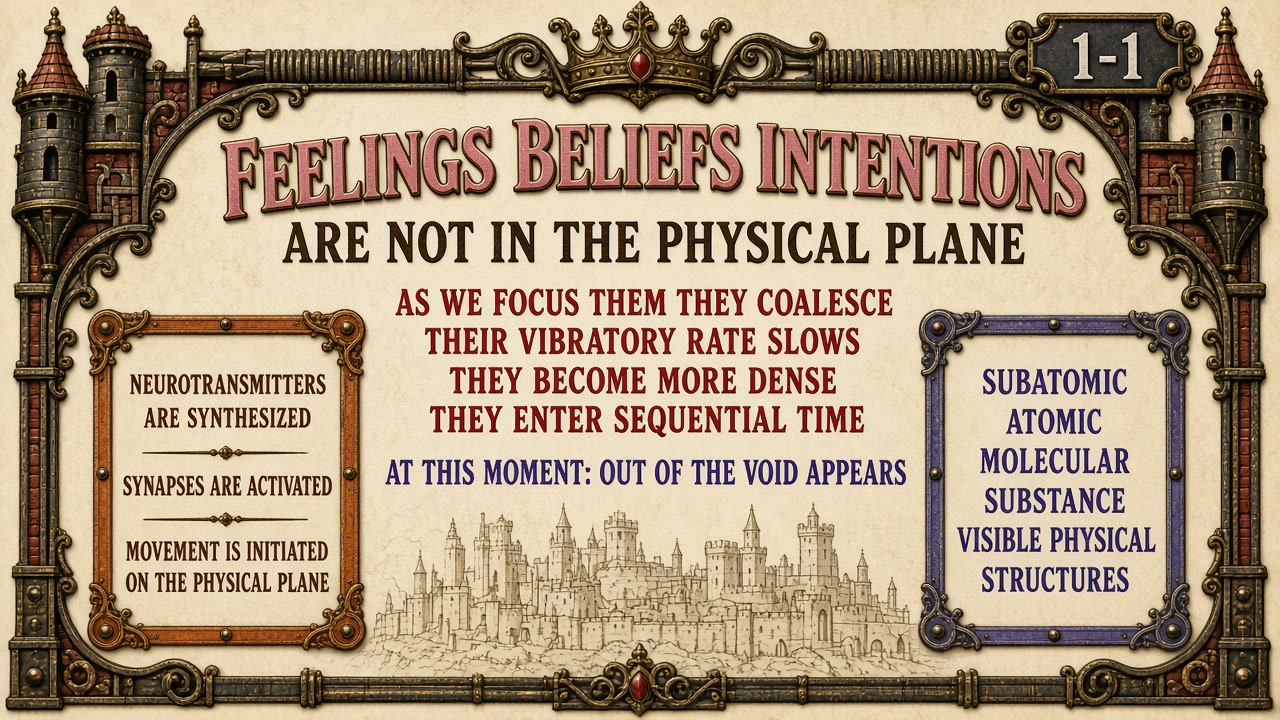
Chart 1-1 is the school. Chart 1-3 is not a philosophy — it is that chart made into a sitting, in order. Skip a step and you treat feeling instead of the actual target — or you trace a channel that was never yours to touch. The sequence is the ethics, written as work.
Feeling, age, story, issue
First name the feeling. Then locate the age or the split — the moment this current first organized, often younger than the scene in front of you. Listen to the story without tidying it. Identify one issue together: you and the body, or you and a consenting adult. One issue. Not the biography.
Meridian, cord, permission, trace
Locate the meridians and find the best one to start. Check for cords — leftover attention still tied to a person or scene. Bonding and cording, later in this course, will teach you the difference between a thread that nurtures and one that manipulates. Ask permission to release. Then trace slowly, down and up. During the release: reflect, focus, empower — which means keep the actual target in view, not a performance of healing. Give quiet time for the shift. Correlate parallels between past and current time. Check for the belief: state it, lift it out, replace it.
Practice
Walk the twelve steps below on one small, true issue of your own. Stop at permission if the inner answer is no. Journal the step that wanted to be skipped.
Check
Chart 1-3 is:
- A philosophy of the field
- The session in order — feeling, age, permission, then the trace ✓
- A list of organs to treat from a color
Skip a step and you treat feeling instead of the actual target.
The 'age or the split' is used by:
- Taking today's chronological age as the only number
- Locating when the feeling first organized — often earlier than the present scene — then asking permission ✓
- Starting the meridian trace before the number has held
A previous event often makes the current one louder.
One issue means:
- The whole biography
- You and the body, or you and a consenting adult — one issue, not the life story ✓
- A dose of issues
Listen without tidying. Then one issue together.
Cords, in this order, are checked:
- After you have already traced
- Before you trace — leftover attention still tied to a person or scene ✓
- Never
Bonding and cording will teach the difference.
Permission is:
- A mood
- A step, not a mood. If the inner answer is no, you stop ✓
- Optional if you are skilled
Chart 1-3 already made permission a step.
During the release you:
- Perform healing
- Keep the actual target in view — reflect, focus, empower ✓
- Skip quiet time
Not a performance.
After the trace:
- Immediately start the next twelve
- Give quiet time for the shift. Correlate past and current. Check the belief — state it, lift it, replace it ✓
- Prescribe a new belief
The sequence is the ethic, written as work.
You walk the twelve steps on:
- A neighbor first
- One small, true issue of your own. Stop at permission if the inner answer is no ✓
- A child
Journal the step that wanted to be skipped.
You do not chase someone else's split because:
- It is impressive
- Consent and the ability to stop keep sensitivity from becoming intrusion ✓
- Splits are a dose you write
Practice on yourself first.
If the body says no at any step, you:
- Skip to the trace so the page looks complete
- Stop. That is the hour working ✓
- Prescribe permission
The sequence is the ethic.