
Chart 9-1 · the rooms · 12 min
Cavities of the face
A read of this page, with the plate.
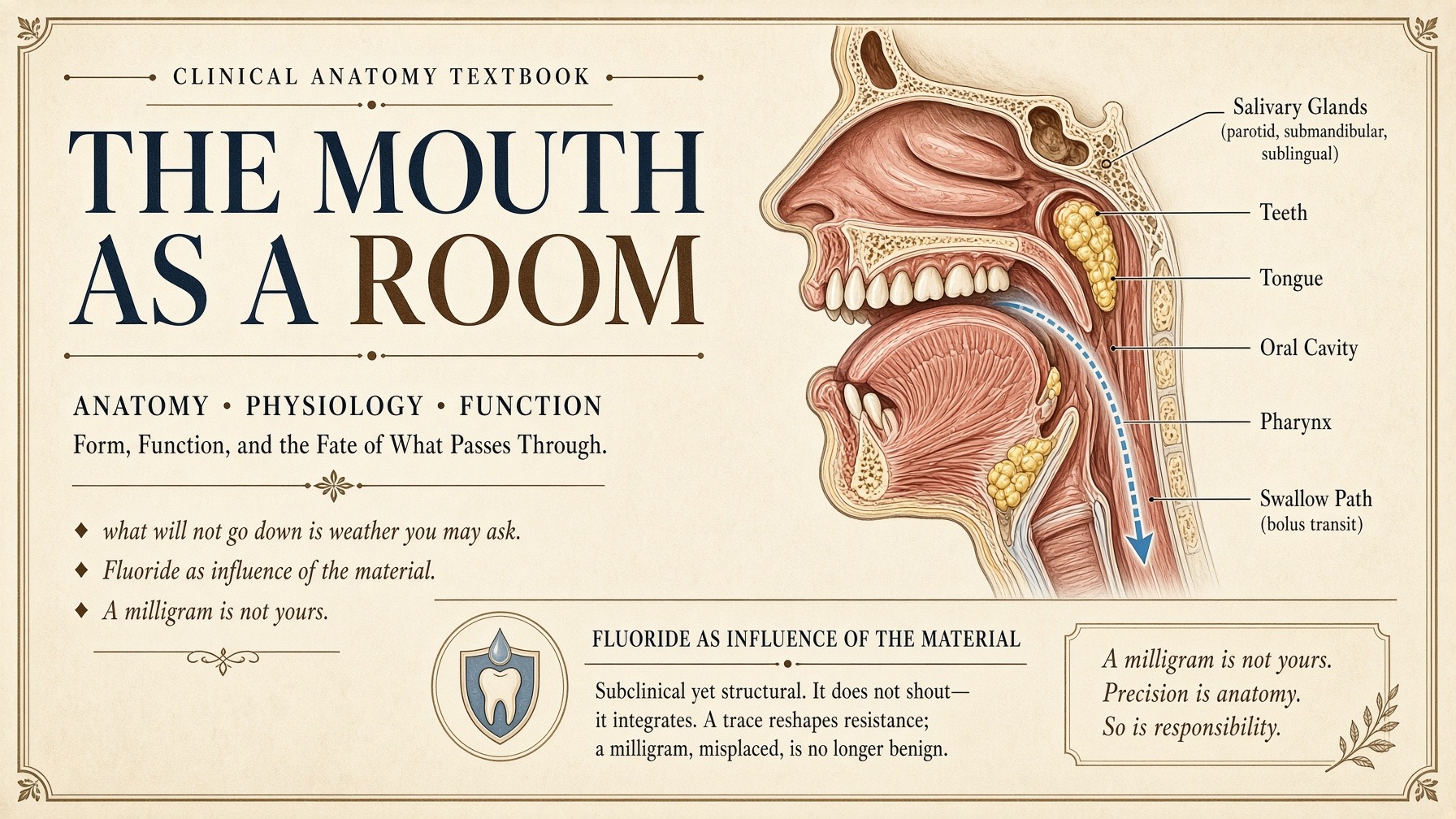
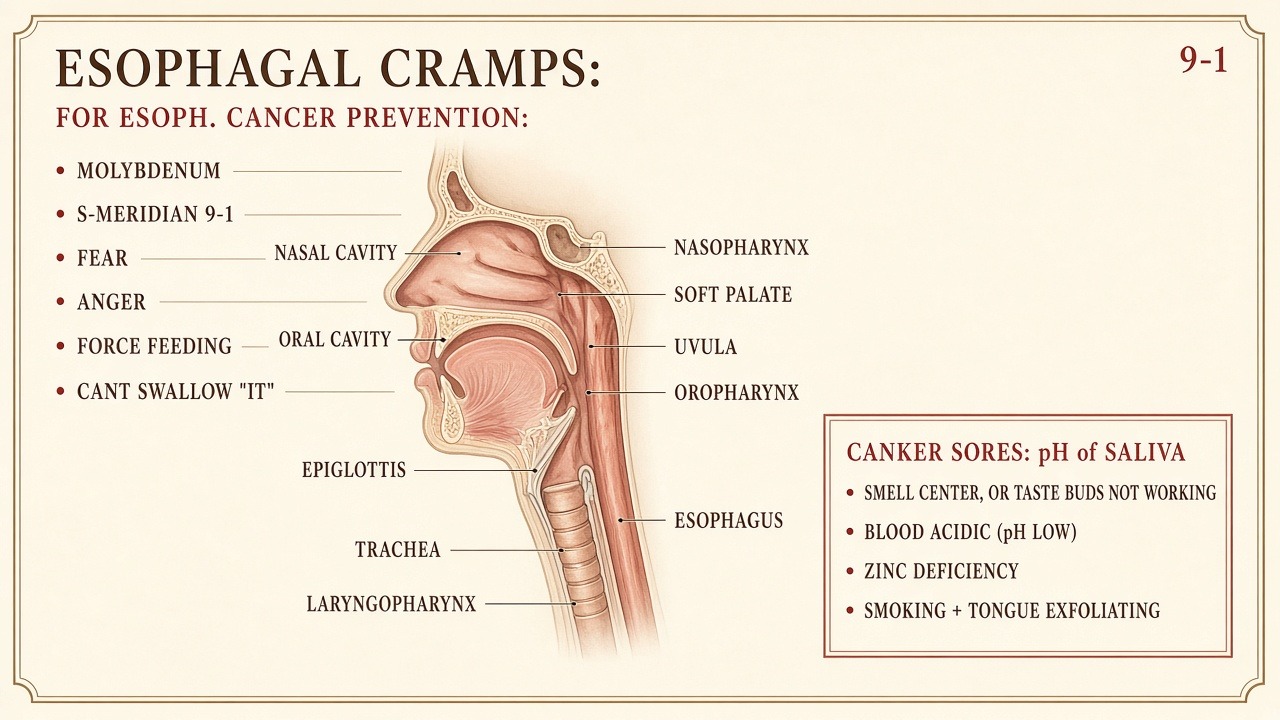
Nasal cavity sits above the nostrils and the hard palate. Pharynx is the whole throat. Then it is subdivided so the drawing can be read: nasopharynx above the soft palate; oropharynx between soft palate and epiglottis; laryngopharynx toward the larynx and the respiratory passage. Uvula hangs at the back. Air past a uvula that is too low vibrates. That vibration names a small night airway — a room, not a mood. The source put an olfactory pod in front of the ear. The bulbs sit under the frontal lobes, above this nasal cavity, through the cribriform plate. Keep the drawing as a teaching arrow. Name the landing.
The flap and the two doors
Epiglottis is cartilage. It closes over the trachea as you swallow so food does not take the lung door. Trachea is in front, air. Esophagus is behind, collapsed unless a bolus is moving. Two doors. You ask whether the flap is doing its job. You name the rooms. You do not invent a trachea meridian to finish the page.
Her voice, from the class.
Nasal & oral cavities of the face
Practice
Swallow once, slowly. Notice the pause where the flap must close. Journal whether the swallow felt like air, food, or a sentence you did not want. Feeling first, then the room.
Check
This hour teaches that the esophagus sits:
- In front of the trachea, always open, as the air door
- Behind the trachea, collapsed unless food is moving ✓
- Inside the nasal cavity, above the hard palate
Two doors. Air in front. Food behind, and only when something is going down.
You use the flap in the work by:
- Parking the swallow on lung because the trachea is nearby
- Asking whether the epiglottis is doing its job — then feeling, age, meridians if the swallow is a feeling ✓
- Asking the liver cell whether bile is soap
Name the room. Then Chart 1-1. Stomach as map waits on the swallow lesson.
Cavities of the face — keep this:
- Inventing a colorful story so the session feels complete
- Then it is subdivided so the drawing can be read: nasopharynx above the soft palate… ✓
- Squeezing the gate until it 'opens'
Then it is subdivided so the drawing can be read: nasopharynx above the soft palate; oropharynx between…
A true line on this hour:
- A name that captures the whole sky
- That vibration names a small night airway — a room, not a mood. ✓
- Opening a chakra by squeezing it
That vibration names a small night airway — a room, not a mood.
This hour teaches that:
- A reason to skip permission
- Esophagus is behind, collapsed unless a bolus is moving. ✓
- A tourist empty-mind contest
Esophagus is behind, collapsed unless a bolus is moving.
Practice on this hour is to:
- A board you invent without her permission
- Swallow once, slowly. ✓
- Proof of supernatural status
Method before bottle. Trace what the lesson names.
Chart 9-1 on this hour is used as:
- A replacement for the physician
- Nasopharynx above the soft palate. Oropharynx to the epiglottis. Laryngopharynx toward… ✓
- A diagnosis stamp you must write today
Translator map — Chart 9-1. Not a prescription pad.
The lab on this hour is for:
- A graded exam that invents the next curriculum
- Feeling and naming what the lesson maps — journal, not a bottle ✓
- A prescription pad for the lab name
Lab is literacy. Not a dose from the yield.
"Cavities of the face" here is best treated as:
- A tourist collection of special experiences
- Nasal cavity sits above the nostrils and the hard palate. ✓
- A rigid diagnosis tool that replaces sleep
Train with the map. Do not invent a second sky.
A common mistake this hour corrects:
- A cream you prescribe from the chart
- It closes over the trachea as you swallow so food does not take the lung door. ✓
- A swap of clothes for the organ
It closes over the trachea as you swallow so food does not take the lung door.