
How this school teaches
A manifesto of living energy
Dr. Ari Boar · Editor · after Kapel · August 2026
The book is the backbone. Chart 1-1 is the first lesson. Everything later — meridian, muscle, organ, material — is that descent made walkable. Read this as a teaching map, then open the manuscript. She would rather you laugh once and go back to the table than memorize ten articles.
Feelings, beliefs, and intentions are not in the physical plane. As they are focused they coalesce, slow, enter sequential time, and become tissue.
Article I
Bioenergy is a working model you can train
Kapel did not ask you to join a religion. She asked you to notice a living current — prana, biofield, the sense of a room after an argument, or after someone at ease has been reading in it — and to treat it as real enough to work with. A person is a local organization of that field. Breath, pulse, warmth, and the sense of being here are how it shows. The work of this school is to feel it, name it, and leave the body-consciousness in charge. Be professional, and have a blast.
Article II
Chart 1-1 — field becomes form
This is the first map. Feeling, belief, and intention live finer than tissue. When they are held, they slow. They enter sequential time. They condense: particle, atom, molecule, cell, organ, a day you can live. Atoms remain themselves inside a molecule; the molecule behaves as something new. We know the result is real because we can touch it. The school’s job is to add the field that was already there, without insulting the beauty of the physical. If you only remember one picture from this manifesto, remember Chart 1-1.
Article III
Meridians translate the feeling into the cell
Once the field has slowed far enough, it needs a path. Meridians are that path: the biofield frequency closest to the physical body. They carry mental and emotional directives into tissue. A job-word, a plus, and a minus belong on each line — courage on bladder, fairness on liver, nurture on stomach, self-worth on spleen. Parking a feeling on a channel is how you find an address. Tracing down, then up, is how you restore ordinary flow. The Atlas draws the line so the fingers know where to go. The Living Clock tells you when a channel is loud. You run meridians on yourself first.
Article IV
The body answers in a language you can teach
A muscle can hold, yield, or stick. Strong is yes. Yield is no. Stuck is not an answer — change the question. Permission first: you show the person a yes and a no in their own arm so the session is not a trick done to them. The arm is a translator for attention. When the field is coherent, the translator holds. When the field is loaded, it yields. Course 01 trains this dialog. Course 02 places it on named muscle. Later courses place it on organ and material. Same binary. Same courtesy. If the answers start to flip, ask whether you are all alone in the auric field — you do not push past that. You notice, and you wait until the field is one person again.
Article V
A session has an order
Kapel’s working order is the teaching. Identify the feeling. Locate the age it still belongs to, or the split. Ask permission. Trace slowly. Check the belief that is still running: state it, lift it if invited, replace it with one the field can stand in. Drink water. From then on the body-consciousness is totally in charge. Speak to it as though it were a shy uncertain animal. You do not improve a feeling. You give it a job and an address. Bonding is nurture. Cording is a thread you may clear when asked. Occupied space is not a hunt — it is the question, are we all alone in the auric field, asked before you run a meridian. Little kids usually need to be held. A visitor who talks is stopped. It’s his appointment.
Article VI
Belief is already chemistry
A sentence still running will keep the feeling in the fiber after the name is gone. That is why Kapel ends a meridian by checking the belief. Bruce Lipton’s Biology of Belief stands beside this map as the cell looking back up Chart 1-1: the membrane reads the bath it is in; expression follows the signal. Same Chart 1-1, two directions. Environment instructs how the book of DNA is read. Read Lipton so the next board is not heard as a cartoon of genes or a cartoon of miracles. The student sits with Chart 1-1, then with the channel, then with the sentence.
Article VII
Materials have influence
Kapel named foods, minerals, vitamins, and other substances as emotional influence of the material. Wheat, milk, corn, soy, oat, a letter, a metal — each can carry a story the field already knows. You ask whether the field is moved. You listen. Age, situation, feeling, meridians, then retest. The name is a door, not a shopping list. Physiology in this school is literacy: how a stomach, a liver, a tooth, a synapse actually works, so you respect depth when you ask. The manuscript’s later chapters are that literacy, written so a student can stand in the tissue without losing the field.
Article VIII
Parts, complexes, and the presenting self
A person is not only a symptom. Jung taught a psyche that organizes seeing. IFS taught parts that can be spoken with. Kapel already asked presenting age — the year the field is still standing in — and whether you are all alone in the auric field. A split is a field in two rooms. You do not overwrite a protector. You do not chase a story the person did not invite. You ask. If no, you work differently. One of her Co-Ps worked very differently from her. She backed off and made space for that — until the day she argued in front of the client, and the client looked up and said, “Are you fighting? Is that the way you fight?” That was funny. The client was right. Mention it later. Not in front of them.
Article IX
The book, then the courses
Volumes I and II from the Bioenergy Balancing Center are the spine. Course 01 walks Chart 1-1, the meridians, the vortices, the dialog, the five jobs. Courses 02–08 place that dialog on muscle, bone, spindle, neck, and arm. Course 09 is Mouth and Teeth — live. Courses 09–18 hold the dialog on mouth, stomach, liver, pancreas, intestines, parasites, allergy, the endocrine clock, and the thyroid. Courses 19–39 continue through adrenals, kidney, gonads, sense, fluid, nerve, amino, vitamin, mineral, and staying safe. Six units. Ari’s job is to make her view teachable — not to shrink it to a cut line. RonB holds the research brief — ten subjects, three reports each. The student reads the manuscript, then walks the hour.
Article X
How we keep the room honest
She called this part Legal Shmegals, and then she went back to the table. Educational wellness. Consent. The skill of stopping when the body-consciousness says stop, or when a situation already belongs with a physician — a bleed, a fracture, a child in danger, a medicine already in the chart. Influence of a material is a question, not a bottle you write from the table. That is enough. The results of the work are in the field that can rest, the channel that can flow, the sentence that can be replaced. They do not need to be argued on every page. The teaching is the proof. Be professional and have a blast.
Named sources
Kapel, then Lipton
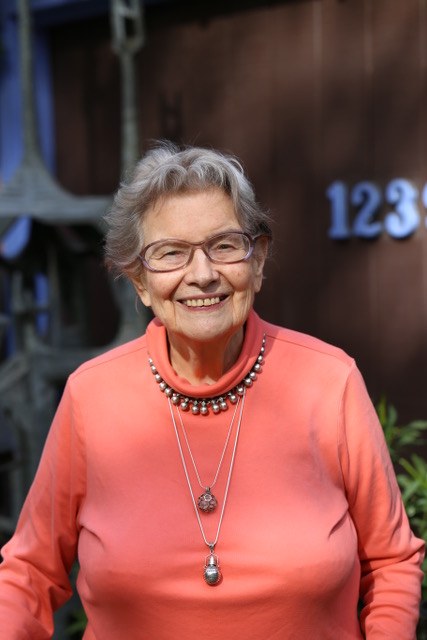
The manuscript is the backbone. Lipton stands beside Chart 1-1 so the cell has a name for the same cascade. Read her first.
- Bioenergy Balancing Center, Palo AltoPriscilla KapelBioenergy Balancing — Volumes I and II. The backbone. Sixteen chapters in this cut. Chart 1-1. Meridians as translators. The session order. The materials as influence.Open the manuscript →
- The cell-side of Chart 1-1Bruce H. Lipton, PhDThe Biology of Belief (2005). The rooms, the shelf, the architecture. Environment instructs expression. Same Chart 1-1, looking back up.Read Lipton →
Keep the room honest
- Do not skip Chart 1-1 and jump to a gadget.
- Do not overwrite a protector, or chase a split the person did not invite.
- Do not write a dose from a yield.
- Do not pretend a sentence rewrites DNA.
- Do not diagnose. Do not treat.
- Do not force a child.
- Do not hunt a visitor so a page looks finished.
The manifesto is Ari’s teaching cut of Kapel’s view — canonical for the short map. The letter, then the walk, then this cut, then the manuscript.