
Class 2 Lab · 13 min
The Class 2 sequence
A read of this page, with the plate.
Permission. Region. Vertebra. Direction. Breath. Muscle. Feeling. Meridian. Hold. If it will not hold, A–D.
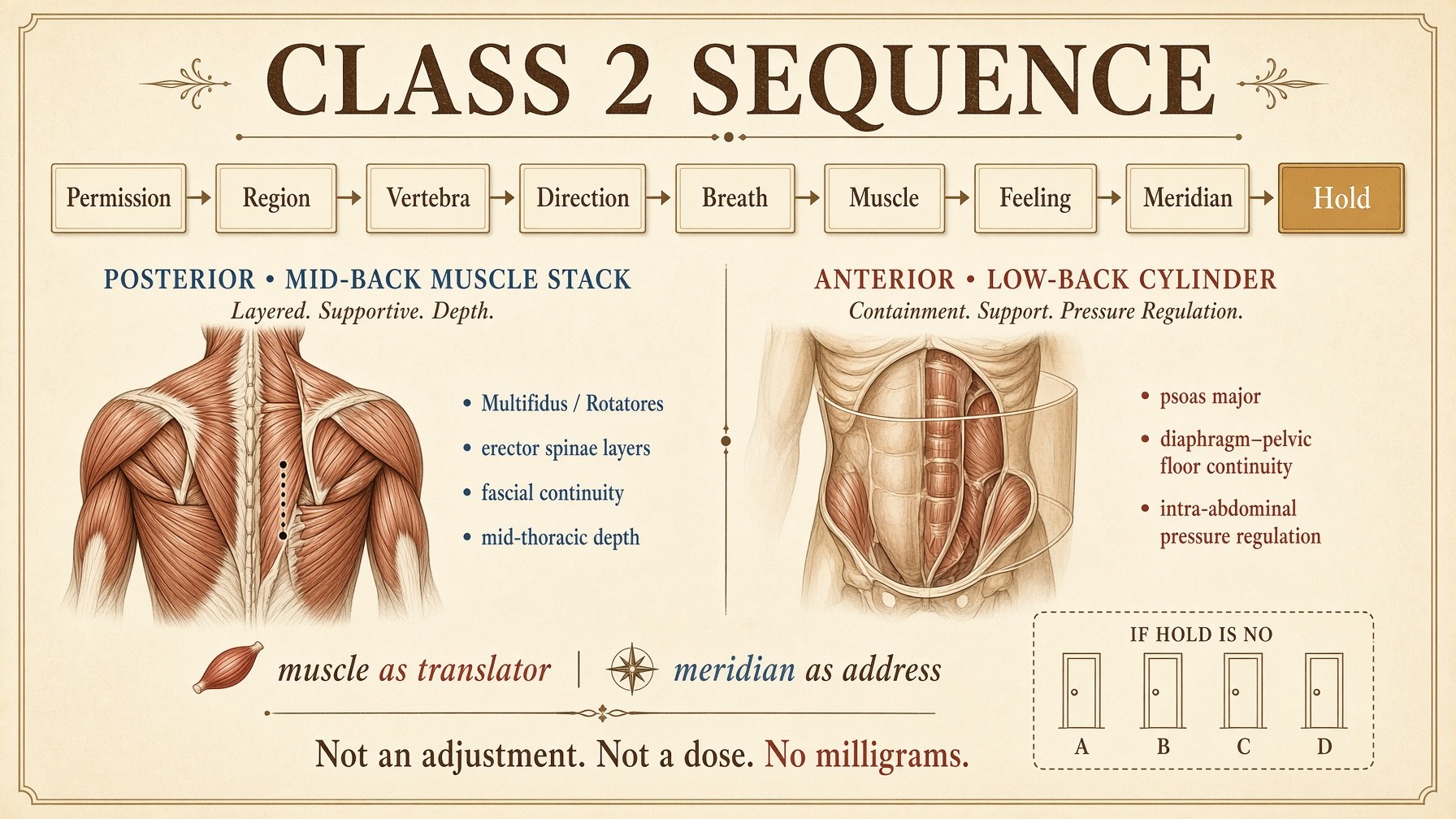
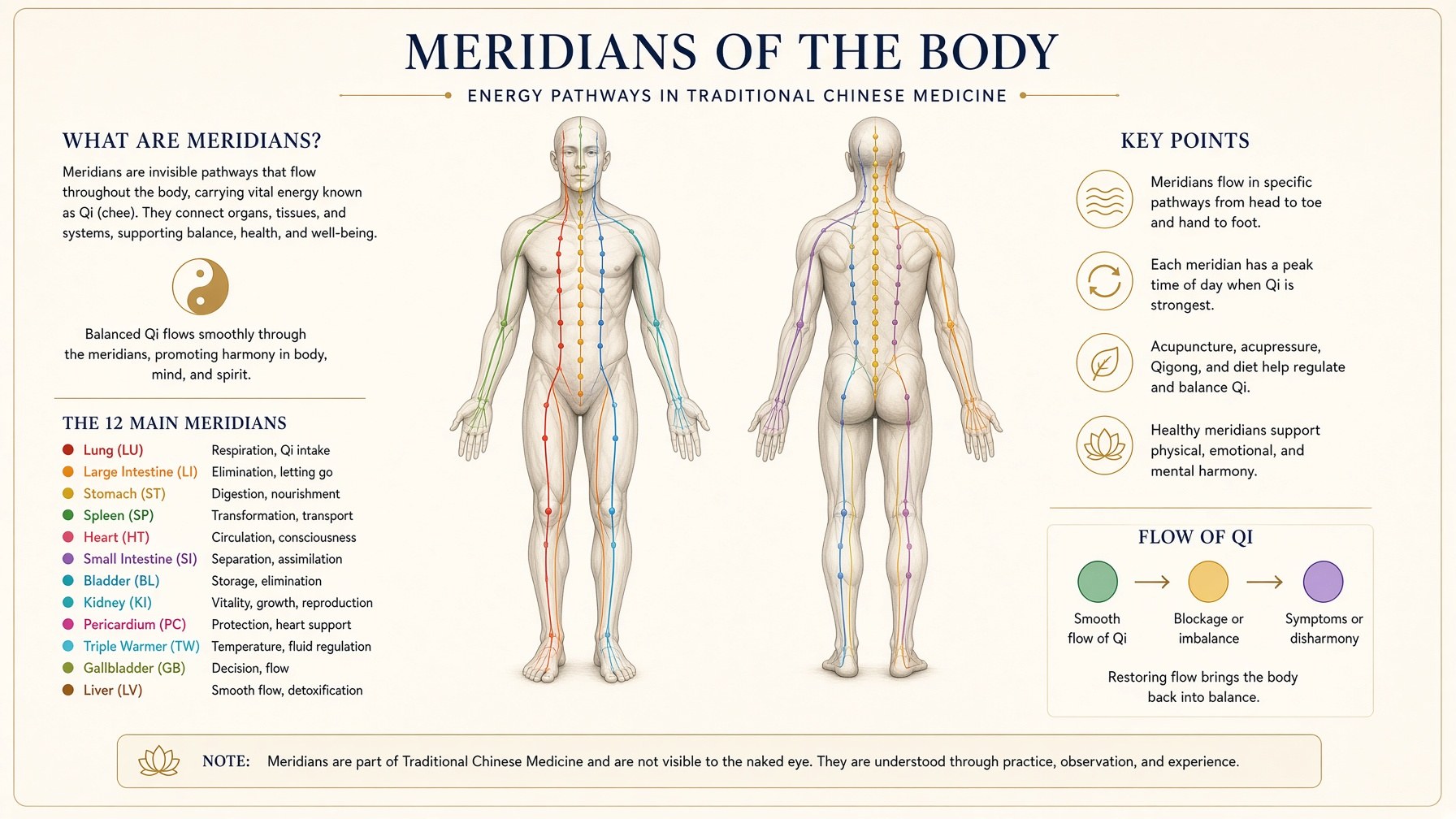
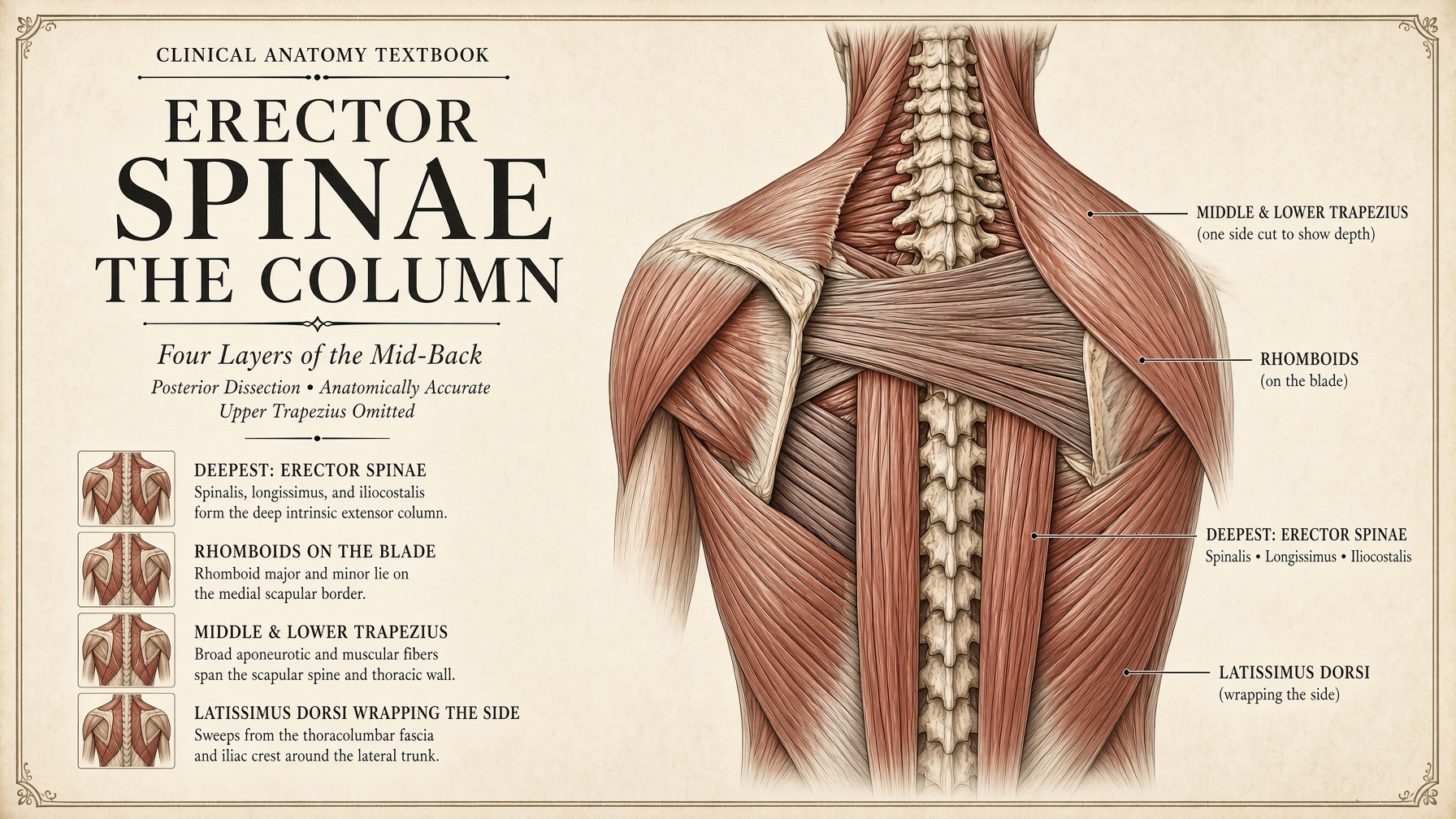
Course 02 closes in the body, not the notebook. Class 2 put the asks in order for spinal alignment and tendon quality. Every later session still starts with name, permission, alone in the auric field, and stated age. Strong holds; yield gives. Show means hold the name — literacy, not a dose you invent.
The opening
Is this the name? Is it all right if we talk with you? Are you all alone in your auric field? Are you the age you stated? These are not small talk. A yield on permission is a stop. A yield on alone is a cord or a split — you do not run a meridian through occupied space. A yield on age is presenting age, not a lie.
The sequence
Class 02 Lab: Spinal Alignment Demo (Chart 2-1) (p 146)
Initial Questions
- 1. Is this client's name? Is it all right if we talk with you?
- 2. Are you all alone in your auric field? Are you client's age years old?
Spinal Alignment Questions on Chart 2-1
Tendon Quality Questions
- 1. Is there a joint in your body where the tendons are less than optimal? (If yes, place hand over different parts of the body until you find the joint that is less than optimal)
- 2. Is this joint your current age?
- 3. (Take the samples of proline, lysine, glycine and Vit C and hold them over the joint) Do you have enough of these ingredients to make optimal connective tissue?
o (If no, take each sample individually, put it on the joint) Are you able to make as much of this as you need?
o (If no for proline) Are you able to make proline from glutamine?
- 4. Do you have enough glutamine to make proline?
o (If no for proline, ask) Do you want this mineral? (Show the body samples of germanium and manganese. If yes,) If you have this mineral, can you make proline from glutamine?
- 5. Do you have enough B1, B5 and biotin to make proline?
o (If B5 is blocked) Is anger blocking your B5?
- 6. (For glycine) Are you able to make glycine from threonine?
- 7. Do you have enough B6 (pyridoxine) in the phosphorylated form of pyridoxal-5-phosphate to make glycine?
- 8. Do you have a negative association to corn (for proline, lysine, corn-based vit C) or soy (for glycine)?
- 9. Is there a toxin blocking the formation of collagen?
- 10. Is there an excess of cortisone blocking your proline synthesis?
- 11. Is there any flfluoride in this body that is blocking synthesis of connective tissue? (If so, test DMAE as a remedy for the flfluoride.)
How you use the lab
On yourself first, or a consenting adult. Strong holds; yield gives. If a step says stop, you stop. Walk Kapel's numbered asks in order — do not invent missing steps. When the PDF shows a sample or ingredient, hold the name and ask; this academy does not invent milligram or dosing language. Ethics still holds after the last yes.
Practice
Walk the Class 2 lab on yourself. Journal one sentence: what the body said first, and whether you stopped anywhere.
Check
Class 2 lab centers Chart 2-1 / tendon quality by asking first:
- Which crystal is strongest
- Is there a joint where the tendons are less than optimal? ✓
- A dose of proline you write
Find the joint. Then age. Then the materials as questions.
Proline, lysine, glycine, and vitamin C in this lab are:
- A prescription pad
- Samples held as questions over the joint — literacy, not a dose ✓
- Skipped after permission
Hold the name. Ask. Do not invent milligrams.
If B5 is blocked, the PDF asks:
- Is anger blocking your B5? ✓
- Is the person failing
- A favorite color
Emotion as a door, asked once.
Corn and soy appear in the Class 2 asks as:
- A grocery list to buy tonight
- Negative association questions for proline/lysine (corn) and glycine (soy) ✓
- A dose
Association, not a protocol you invent.
Fluoride in the Class 2 list is asked with:
- DMAE as a name to check — not a student prescription ✓
- A brand you must sell
- Nothing
Show the name. Literacy.
The Class 2 lab opens with:
- A favorite color, a mantra, and a crystal grid
- Name, permission to talk, alone in the auric field, and stated age — then the class asks ✓
- A milligram list you write before the first yes
Every later ask belongs on that permission. Occupancy before the trace.
A yield on permission is:
- A suggestion to press harder
- A stop ✓
- A dose you write
You do not run a meridian through a no.
“Are you all alone in your auric field?” — a yield means:
- Talk louder so the field can hear
- There is company — a cord or a split — and you do not invent chemistry yet ✓
- The person has failed the course
Company in the field is not a channel problem. Check cords and splits first.
Show / hold a name in this lab means:
- Write a milligram and a brand
- Hold the name as a question — literacy, not a dose you invent ✓
- Skip permission because the PDF listed an ingredient
Kapel's list is asked. This academy does not invent dosing language.
If a step says stop, you:
- Skip it so the lab looks complete
- Stop. The field still holds after the last yes ✓
- Press harder until you find a problem
On yourself first. Strong holds; yield gives.