
Charts 3-1 · 3-3 · 3-7 · 10 min
The fiber, again
A read of this page, with the plate.
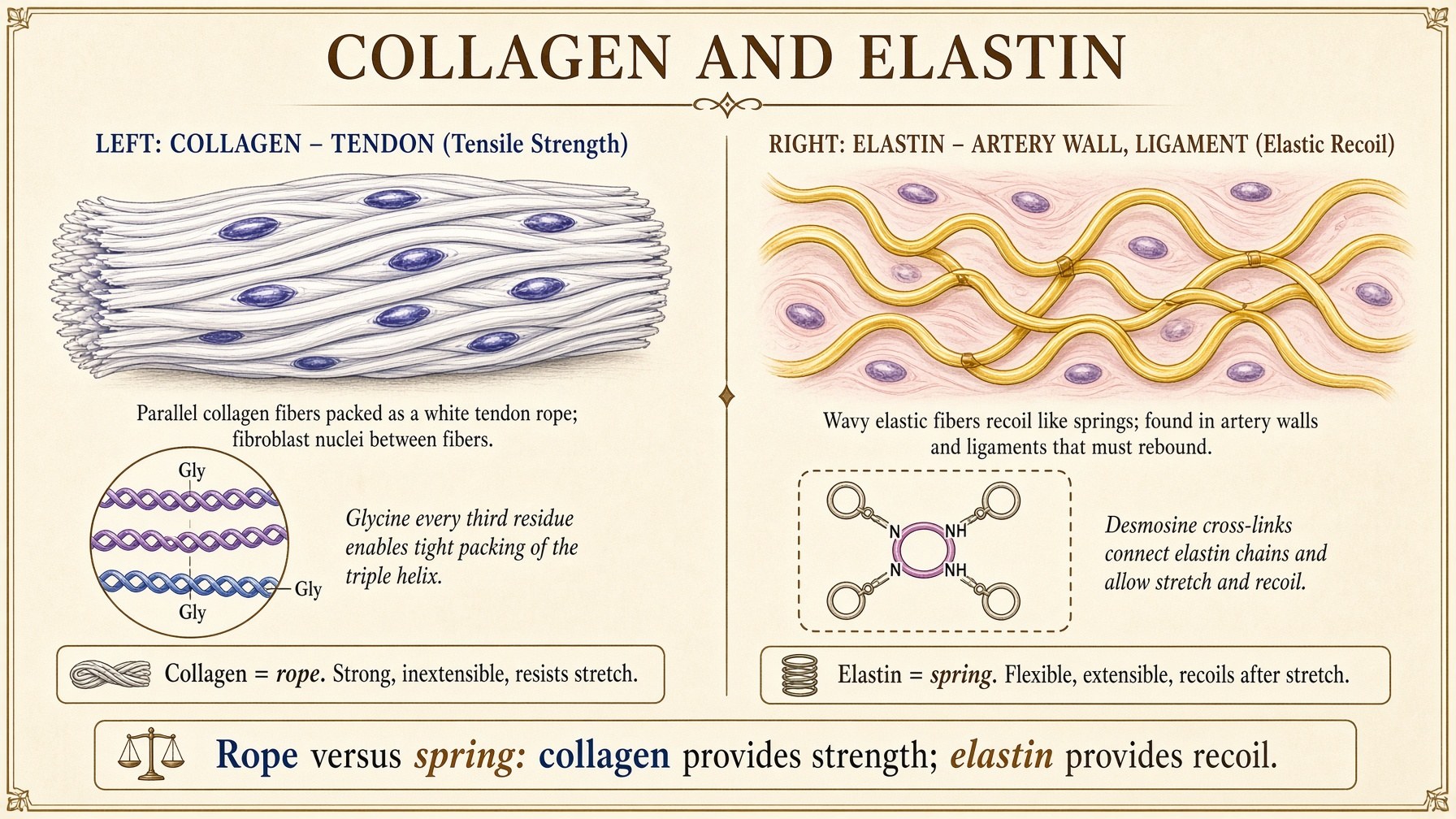
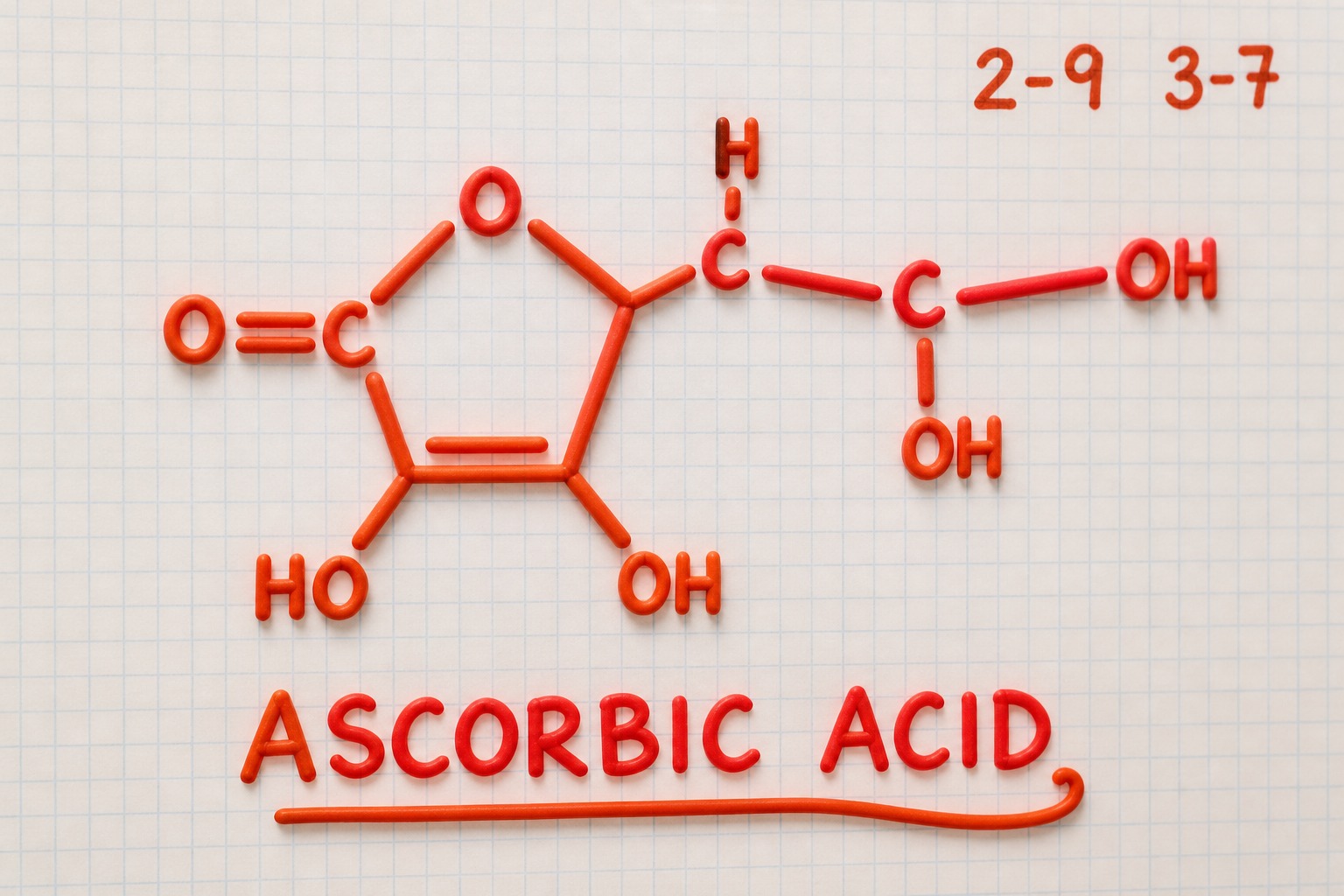
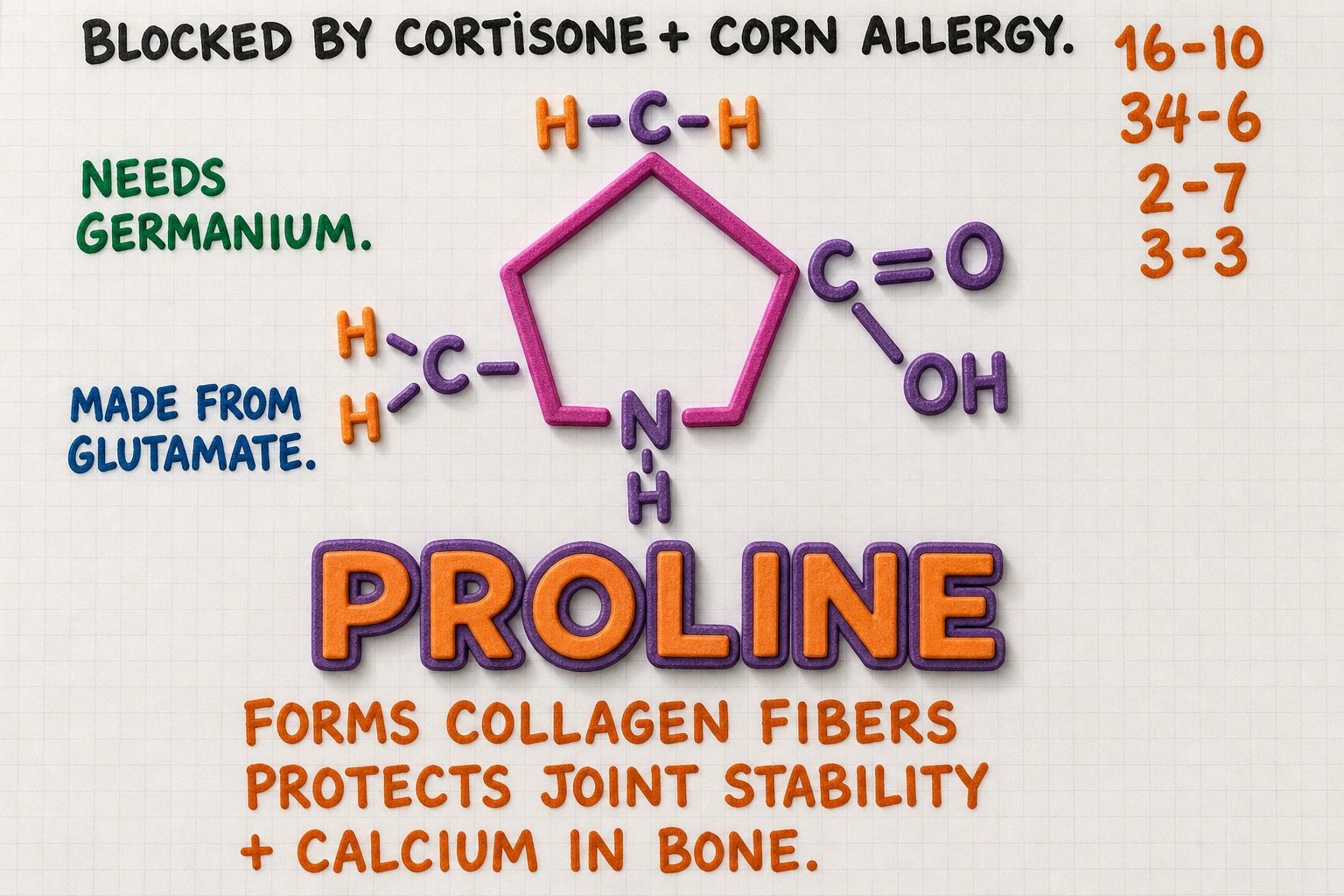
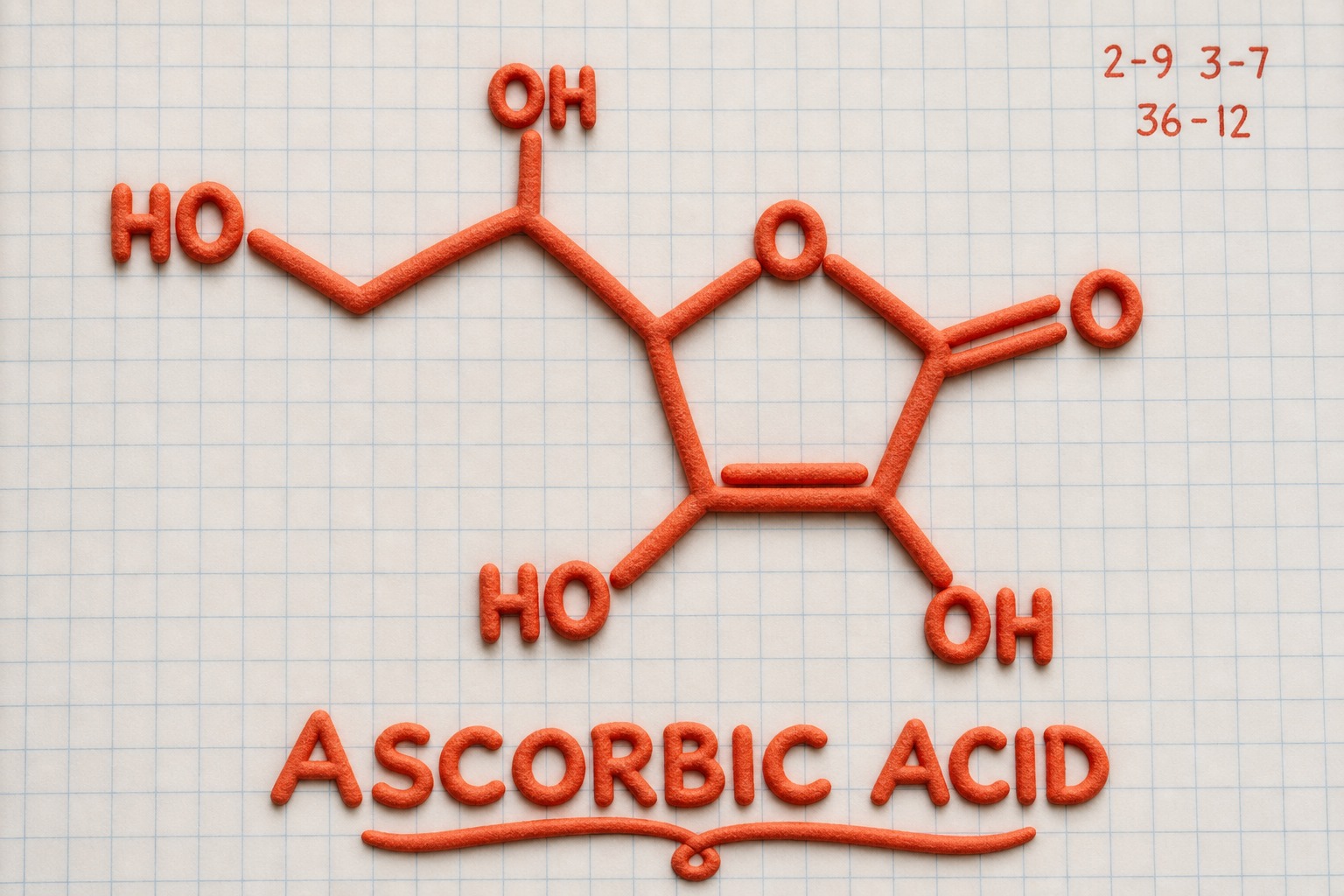
Class 3 brings the tendon vocabulary back because the lab will ask about tendon quality in the pelvis. Chart 3-1 is the glossary you already covered (Course 02 called it 2-2). Chart 3-3 is the longer cortisone note: prolonged glucocorticoids compromise connective tissue and bone repair — a reason a hold may not be yours. Chart 3-7 is ascorbate. Rubidium as an emotional influence on hydroxyl placement. The letter C on ascorbate — cancer, a grade, an accident at sea — stands the same way: the material is emotionally influenced by the word, and the word by the material. Ask.
Ascorbate, named once
Without ascorbate the helix is under-built: gums, bruises, slow wounds, joints that hurt. We name it so ‘tendon quality’ has a floor. The letter C is influence. Ascorbate is the cofactor. Two sentences. Chart 1-1 still orders the work if a feeling belongs on the letter.
Her voice, from the class.
Collagen vs elastin — proline, lysine, glycine, C
Rubidium — without it you cannot hydroxylate
Fibroblast — the cell that makes the fibers
Practice
Open the influence chips on rubidium and the letter C. Ask once. Name ascorbate as the cofactor.
Check
Rubidium on the hydroxyl-placement slide is:
- An emotional influence of the material — asked of the field ✓
- A CX translator, with piriformis
- The same chip as germanium, so the two boards collapse
Influence stands throughout. CX is the cover. Germanium sat on proline in Course 02; rubidium belongs on the hydroxyls here.
You use the fiber review by:
- Naming the glossary from Course 02, then asking rubidium and the letter C as influence ✓
- Parking ascorbate on large intestine with TFL, because both are straps of repair
- Skipping the chips and tracing only CX, because the bowl is the new room
Glossary, then influence. TFL is metal’s translator. CX is the cover, not a skip of the material.
The fiber, again — keep this:
- A tourist empty-mind contest
- Chart 3-1 is the glossary you already covered (Course 02 called it 2-2). ✓
- A replacement for the physician
Chart 3-1 is the glossary you already covered (Course 02 called it 2-2).
This hour teaches that:
- A bottle that finishes the feeling
- The letter C on ascorbate — cancer, a grade, an accident at sea — stands the same way… ✓
- Treating every hour as interchangeable production
The letter C on ascorbate — cancer, a grade, an accident at sea — stands the same way: the material is…
A true line on this hour:
- A swap of clothes for the organ
- The small stamps 2-7, 2-9, 15-9 are her older plate numbers: proline, ascorbate, the… ✓
- A name that captures the whole sky
The small stamps 2-7, 2-9, 15-9 are her older plate numbers: proline, ascorbate, the letter C.
Practice on this hour is to:
- A cream you prescribe from the chart
- Open the influence chips on rubidium and the letter C. ✓
- Skip the journal and invent a diagnosis
Method before bottle. Trace what the lesson names.
Chart 3-1 on this hour is used as:
- Inventing a colorful story so the session feels complete
- Chart 3-1 is the glossary Course 02 named as 2-2. The small stamps 2-7, 2-9, 15-9 are… ✓
- A cream dose from the caption
Translator map — Chart 3-1. Not a prescription pad.
The lab on this hour is for:
- A graded exam that invents the next curriculum
- Feeling and naming what the lesson maps — journal, not a bottle ✓
- A prescription pad for the lab name
Lab is literacy. Not a dose from the yield.
"The fiber, again" here is best treated as:
- A tourist collection of special experiences
- Class 3 brings the tendon vocabulary back because the lab will ask about tendon quality… ✓
- A rigid diagnosis tool that replaces sleep
Train with the map. Do not invent a second sky.
A common mistake this hour corrects:
- Thyroxine from the medulla
- Chart 3-3 is the longer cortisone note: prolonged glucocorticoids compromise connective… ✓
- Collapsing two houses into one word
Chart 3-3 is the longer cortisone note: prolonged glucocorticoids compromise connective tissue and…