
Chart 14-3 · protozoa · numbered as drawn · 12 min
The small pictures
A read of this page, with the plate.
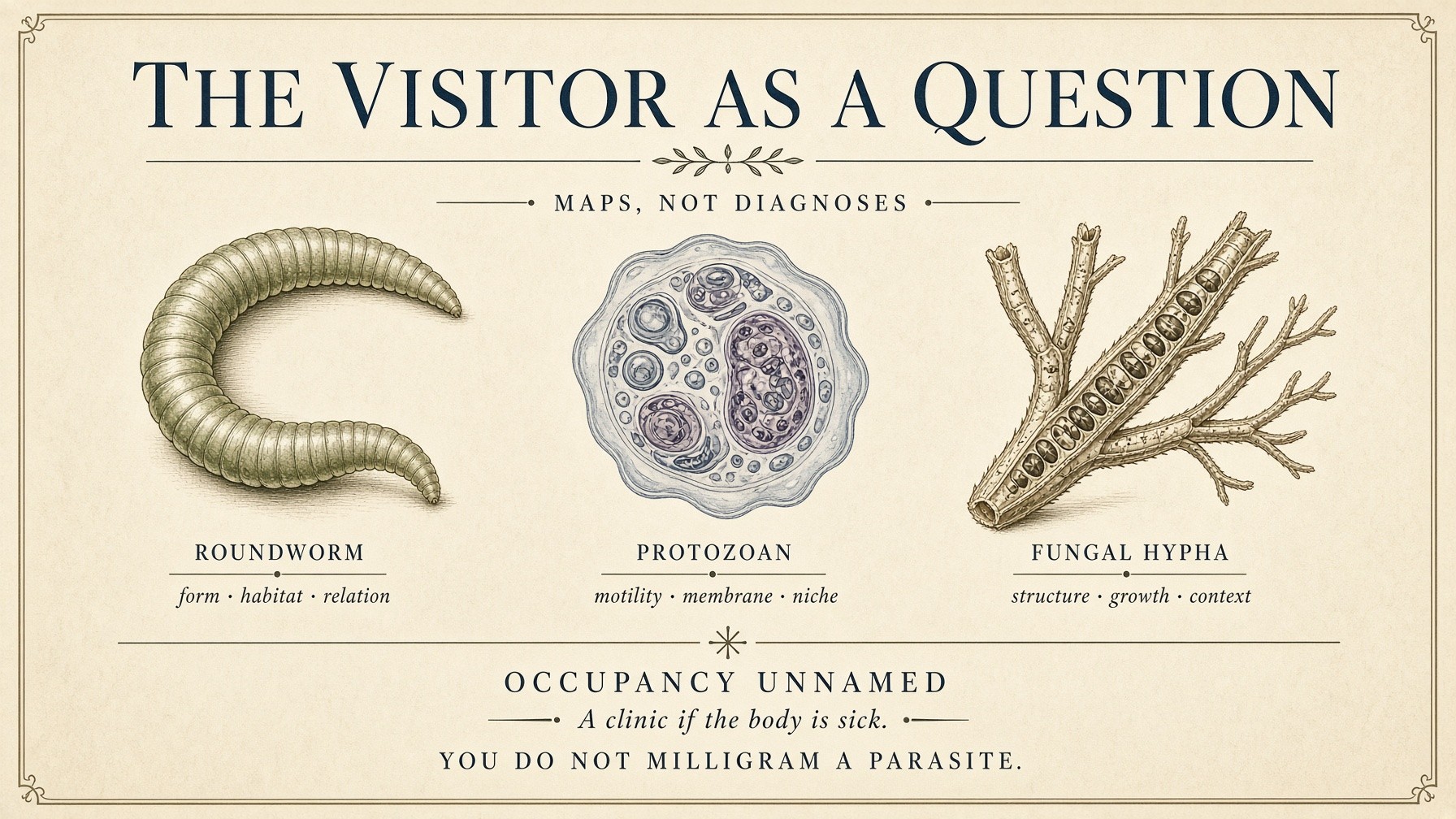
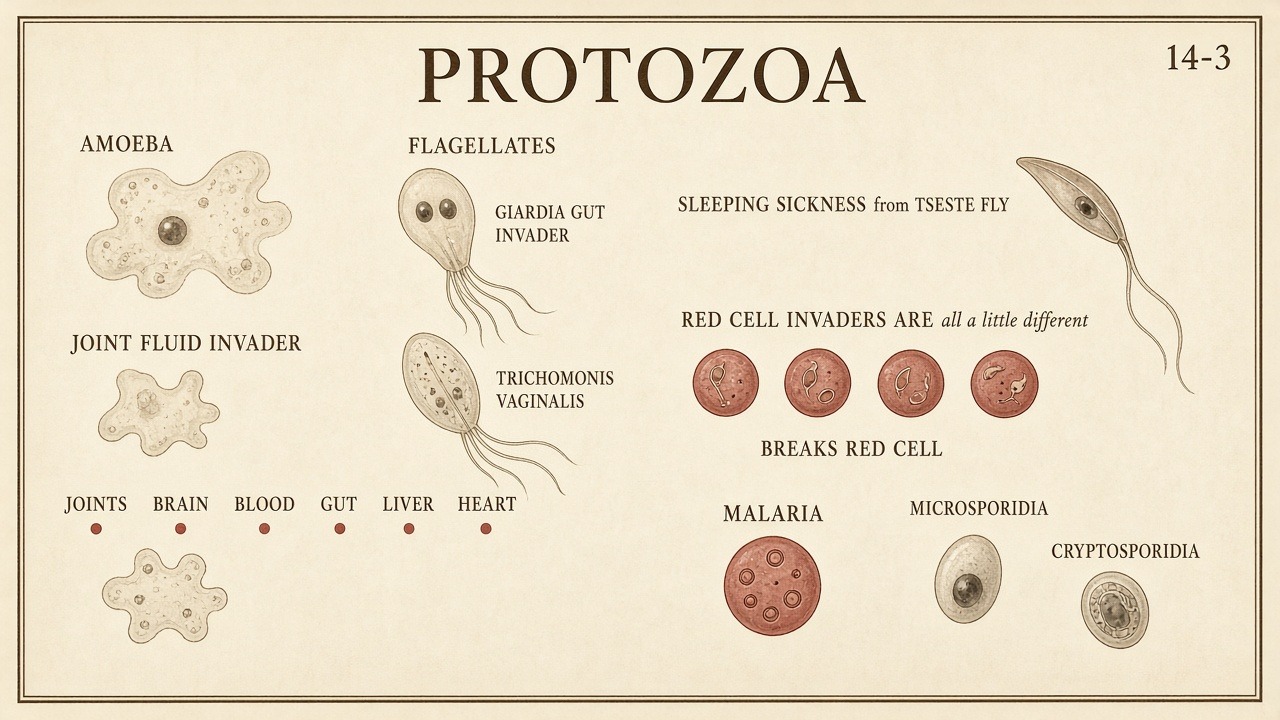
If you want to know what the body is talking about, show the pictures. If you do not have a picture, a selected name can tell you a lot — and what you say must stay a vibrational indicator. Amoeba as a joint-fluid invader. Giardia as a gut flagellate. Cryptosporidia as a gut picture, next to giardia — not a red-cell invader. Trichomonas named. Sleeping sickness from the tsetse. Red-cell invaders: malaria, microsporidia — all a little different. A parasite as a picture. Occupancy of a host is the teaching.
Practice
Look at 14-3 until each picture is a name you can hold. Journal which one talked.
Check
This hour teaches that showing a parasite picture is:
- A laboratory identification of a species
- A vibrational indicator — the body will identify itself ✓
- Proof the red cell is the only room they sit
Stay with the picture. Amoeba, giardia, a flagellate: names on 14-3. Occupancy of a host, not a census.
You use 14-3 by:
- Asking the colon which Bristol type the flagellate prefers
- Holding the picture above the body, then asking which name the field answers ✓
- Walking methionine because protozoa block SAM
Show the picture. Hand above. Influence of the material if a box is later asked. Chart 1-1 if a story sat on the visitor.
This hour teaches that:
- A dose you write from a yield
- If you want to know what the body is talking about, show the pictures. ✓
- Inventing a colorful story so the session feels complete
If you want to know what the body is talking about, show the pictures.
The small pictures — keep this:
- Opening a chakra by squeezing it
- If you do not have a picture, a selected name can tell you a lot — and what you say must… ✓
- A reason to skip permission
If you do not have a picture, a selected name can tell you a lot — and what you say must stay a vibrational…
Practice on this hour is to:
- A cream you prescribe from the chart
- Look at 14-3 until each picture is a name you can hold. ✓
- Treating every hour as interchangeable production
Method before bottle. Trace what the lesson names.
Chart 14-3 on this hour is used as:
- Living against the tide on purpose
- Show the picture. The body will identify itself. ✓
- A name that captures the whole sky
Translator map — Chart 14-3. Not a prescription pad.
The lab on this hour is for:
- A graded exam that invents the next curriculum
- Feeling and naming what the lesson maps — journal, not a bottle ✓
- A prescription pad for the lab name
Lab is literacy. Not a dose from the yield.
A common mistake this hour corrects:
- Collapsing two houses into one word
- Cryptosporidia as a gut picture, next to giardia — not a red-cell invader. ✓
- Squeezing the gate until it 'opens'
Cryptosporidia as a gut picture, next to giardia — not a red-cell invader.
Keep this from the body of the hour:
- Invent a colorful story so the session feels complete
- Amoeba as a joint-fluid invader. ✓
- A bottle that finishes the feeling
Amoeba as a joint-fluid invader.
You use this lesson by:
- A board you invent without her permission
- Sleeping sickness from the tsetse. ✓
- A rigid medical diagnosis you must stamp
Sleeping sickness from the tsetse.