
Chart 29-2 · 12 min
The head
A read of this page, with the plate.
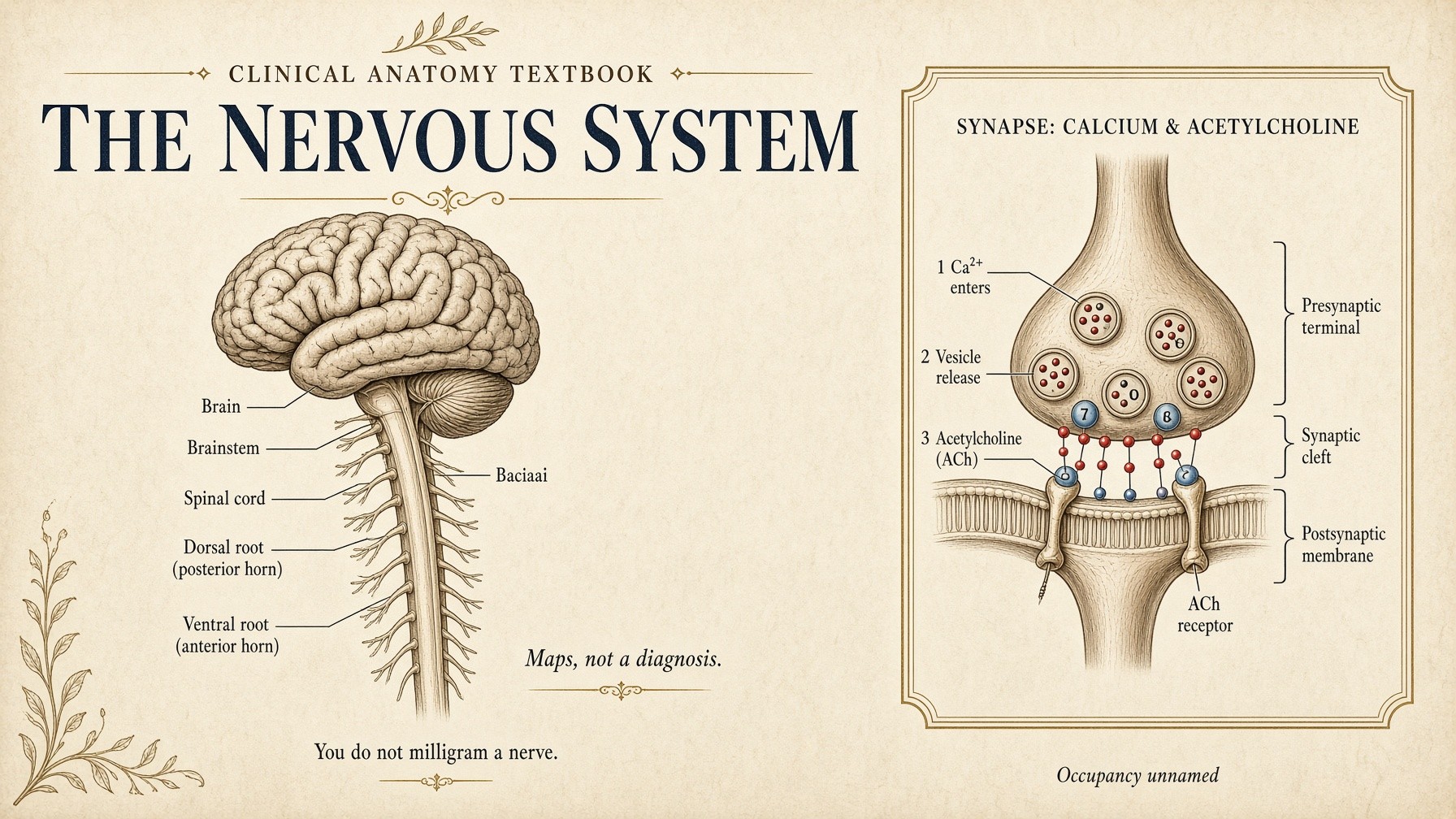
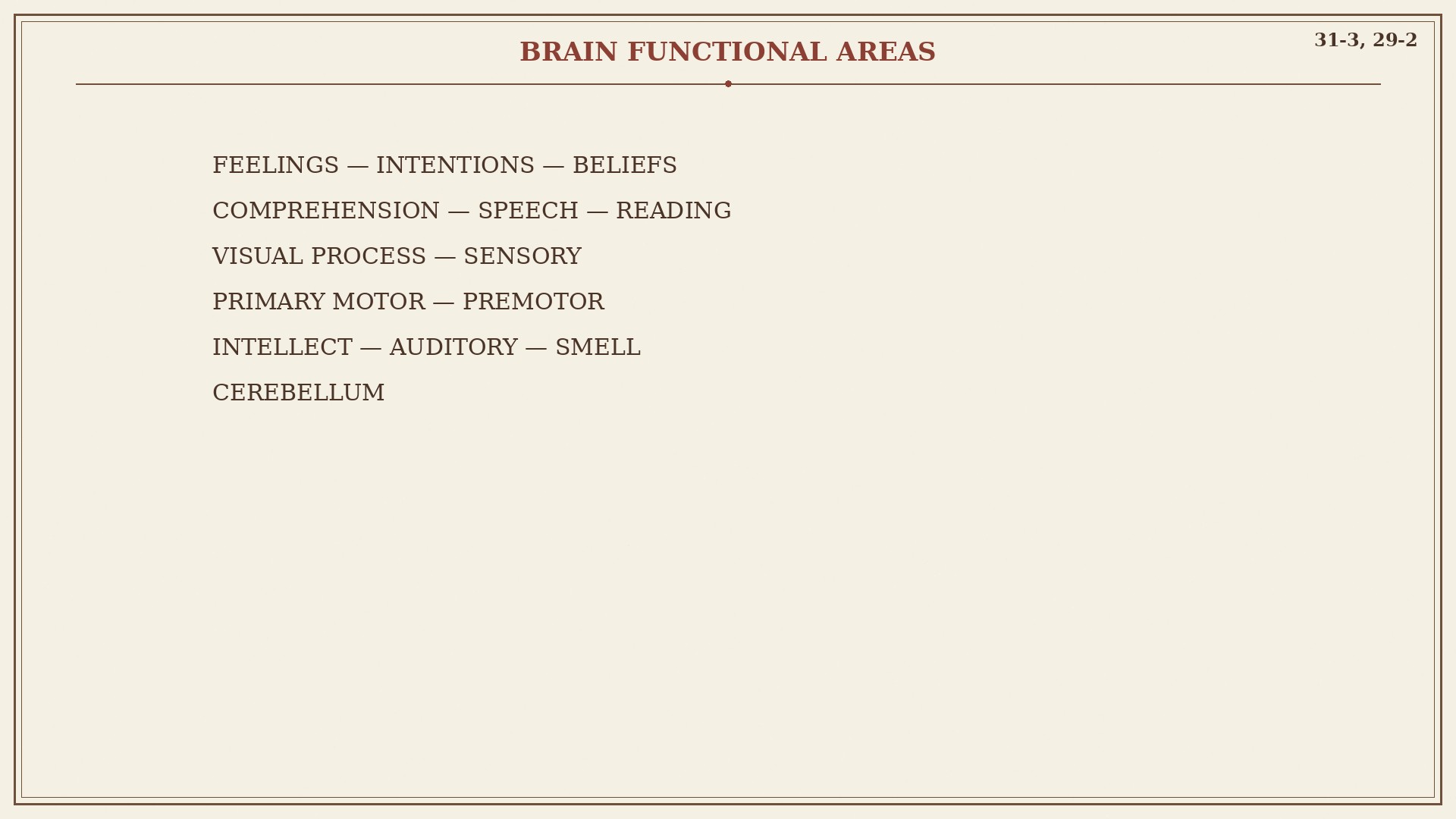
Rooms that start a wire. Primary motor. Nerves cross in the medulla — right moves left. Sensory. Premotor as habit. Speech, sight, sound. Cerebellum as balance. Two halves as her picture, not a diagnosis. Feelings, intentions, beliefs sit above the skull as influence — Chart 1-1. Course 30 holds these rooms in more depth. Tonight they are named so the wire has a start. A sudden vision change, a stroke: you stop.
Her voice, from the class.
The head — motor rooms, sensory, speech, plan then execute
The head — left and right rooms
Practice
Point motor, sensory, cerebellum. If the room is a stroke, you leave.
Check
Primary motor on 29-2:
- Receives
- Initiates a conscious move — nerves cross in the medulla ✓
- Is a horn
Right moves left.
Primary sensory:
- Initiates a move
- Receives — a feeling has a room ✓
- Is myelin
That's the work.
Premotor is:
- Balance
- Habit — a trained skill that can still be modified ✓
- The rush
That's the work.
Speech · sound · sight:
- One dose
- Motor speech, auditory, visual — cerebellum as balance under the skull ✓
- The 43 pairs
A sudden vision change belongs with a physician.
Two halves on this hour:
- A diagnosis you dose
- Left as speech and line, right as space and tone — stereotypes as a picture, not a diagnosis ✓
- MS
Both sides can do both.
Asks about transmitters, MS, cord horns on this hour:
- Belong
- Lifted from 29-1 — cut; this hour is five rooms ✓
- Are premotor
Path’s cut.
Course 30 on this hour:
- Is this hour
- Sits the crossing in more depth — tonight the rooms that start the wire ✓
- Is Sphingolin
That's the work.
Cerebellum on the head hour:
- A dose you write
- Balance under the skull ✓
- The anterior horn
That's the work.
If vision changes suddenly:
- You prescribe thiamin
- You stop — a physician ✓
- You wait for Course 30
The stop.
Five rooms are:
- Quiet and rush
- Motor, sensory, premotor, speech-sound-sight, two halves ✓
- The knob
Write those asks.