
Class 20 Lab · 14 min
Ask the beans
A read of this page, with the plate.
Name. Permission. Alone in the field. Age. Then the class asks — and only then the work.
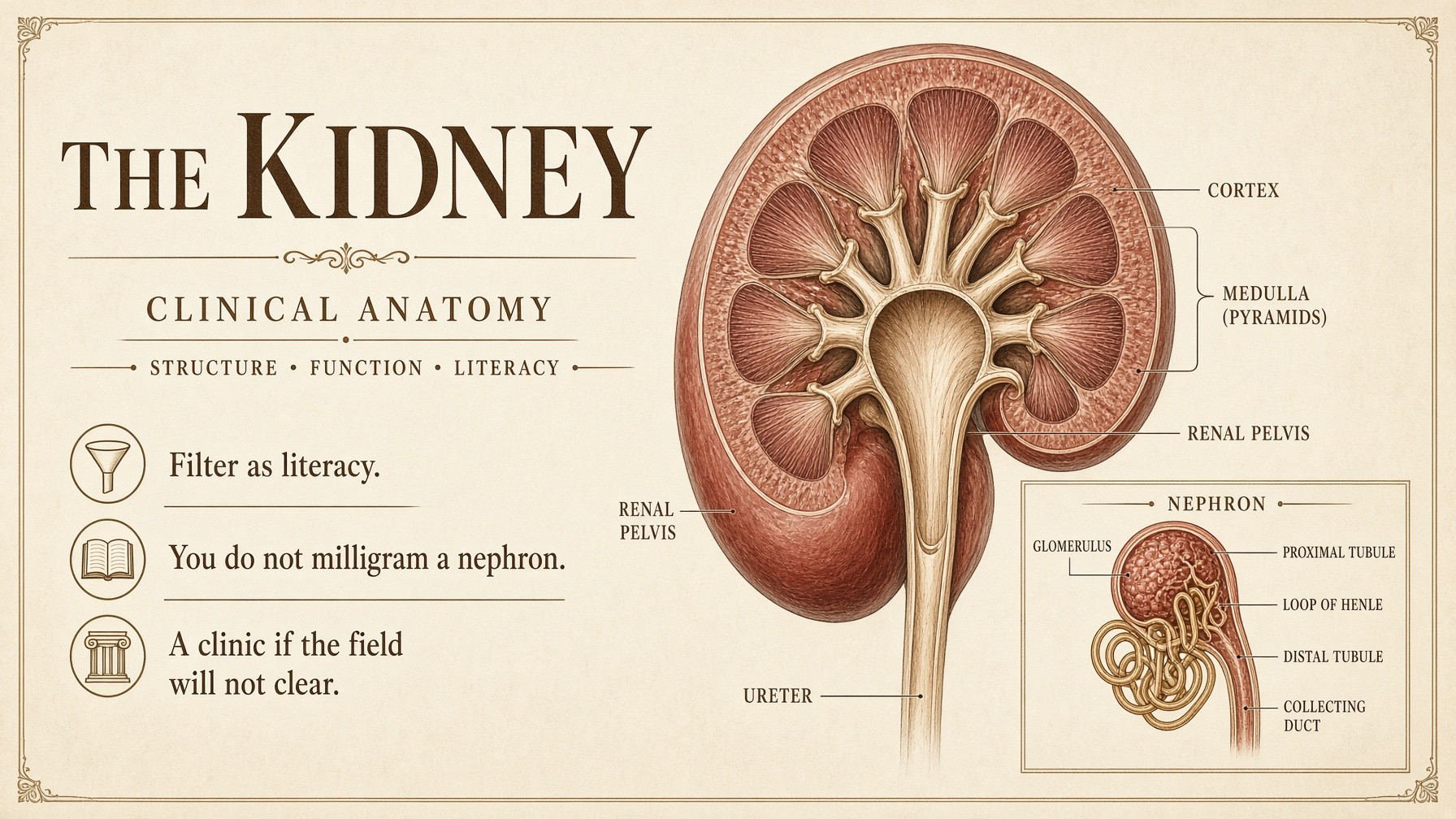
Course 20 closes in the body, not the notebook. Class 20 put the asks in order for kidneys and bladder. Every later session still starts with name, permission, alone in the auric field, and stated age. Strong holds; yield gives. Show means hold the name — literacy, not a dose you invent.
The opening
Is this the name? Is it all right if we talk with you? Are you all alone in your auric field? Are you the age you stated? These are not small talk. A yield on permission is a stop. A yield on alone is a cord or a split — you do not run a meridian through occupied space. A yield on age is presenting age, not a lie.
The sequence
Class 20 Lab: Kidney & Bladder Questions June 10, 2020
Initial Questions:
• Is this (client's name)? Are you all alone in your auric field? • Are you (client's age) old? Are there any cords coming in or out? Self-cords? • Is it all right if we talk to you about your kidneys? and your bladder?
Kidney's
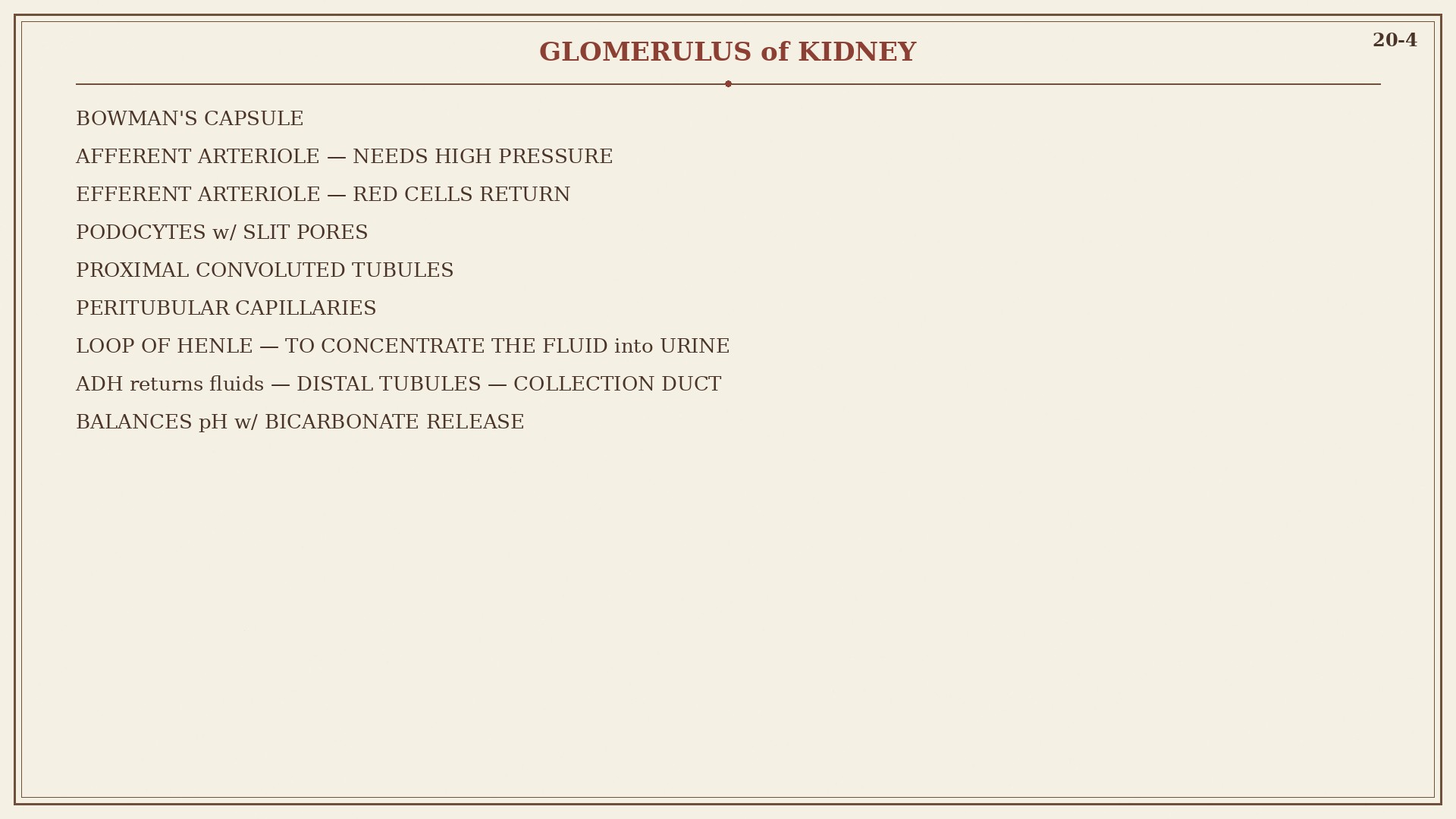
• Kidneys, are you both in here? • Are you filtering the blood properly? • Does the blood come in thru the renal artery into the afferent arterioles and into the glomerulus? • Is plasma pushed thru the slit pores between the podocytes and into the proximal tubules by the body's blood pressure? • Is there a problem with glomeruli? o If so, ask if body wants Omnicholine ▪ (choline helps dissolve fat globules trapped in kidney filters) o also test BioRenal to help kidney detox fungus/parasite die off
• Does your owner give you enough water? o are there toxins in your water like flfluoride? chloramines?
• Is your blood pressure high enough to accomplish filtering properly? • Do you receive just the right amounts of aldosterone from the
adrenal glands when you secrete renin? Does the renin cause
angiotensinogen in the blood to be converted to angiotensin I? Then do the lungs convert this to angiotensin II correctly? And does this stimulate the adrenal cortex to produce aldosterone? o in correct amounts? • Do you have enough potassium? enough sodium? o low sodium can be a factor in chronic fatigue (use low-processed salt) o low or high potassium can affect heart muscle
• are the slit pores open enough to allow toxins to be eliminated? o if not, are your podocytes swollen? if so, ask if there is too much glucose in the blood • Do the glomerular capillaries reform to form efferent arterioles?
• Do they wind around the proximal tubules and assist with the reabsorption of water & nutrients? • Are nutrients and water reabsorbed into the body here at the proximal tubules? • Does this work properly for you? • Are the pores of this peritubular capillary system open enough? o if not ask about rubidium also ask about corn allergy • are the peritubular capillaries not screening enough? letting toxins thru? • is this showing up on your skin as rashes? eczema? o if yes, try DHA to close up capillary receptors, screen toxins
• Does the concentrated discharge go down into the Loop of Henle from the proximal tubule? • Is it concentrated into urine here? • Is the urine sent by the distal tubule to the collection duct? • Does it flow thru the medulla to the calyxes? • From here does it flow into the ureter tubes? • are your ureters able to flow the urine into the bladder appropriately?
• Does the pituitary send ADH down to control the expansion or contraction of the distal tubes? • are you retaining too much fluid? o if yes, is the pituitary sending too much ADH? do you have enough B1? can you activate the enzyme in your small intestine that goes to the liver to facilitate the B1? (low B1 can cause fluid retention) • do you have too much salt? or, are you dehydrated, do you need more H2O? • Is the pituitary sending too little ADH? (client will be urinating all the time) o do you have too much glucose in your blood? (low insulin, body holds back ADH to flush sugar) • Kidneys, do you generate bicarbonate ions when you measure low pH in the blood? (acidity) • do you have adequate vitamin D to make the bicarbonate?
o if not, ask if vit. D has been inactivated because of too high pH?
(alkalinity)
o if so, check for parasites, fungus, manganese low disrupting the
urea cycle (chloramine in H2O)
• If the client's back is hurting, has a fever, feels "spacey", ask about infection o the filters get clogged by macrophages o offer vit A, vit C (test for numfiber of grams, maybe 4-6 g.), AHCC boosts immune system, colloidal silver, homeopathies o They should go to a doctor for antibiotics, not mess around
• Kidney pain could be stones. offer magnesium, vitamin C, B6, work with blood pH, cranfiberry juice (lower pH) grapefruit juice (raise pH), urea cycle, o ask if a pharmaceutical drug is contributing to stone creation. check kidney meridian o there are many herbs that benefit the kidneys
• ask if kidney is releasing erythropoietin appropriately when it detects low oxygen levels, in order to stimulate production of red blood cells by stem cells in the bone marrow
Bladder
• Body, is it alright to ask about your bladder? • is your sphincter muscle closing and opening properly? o if not, check for fungus. o then hormones. offer progesterone o check fifirst chakra or second pelvic biofield. o check nerve conduction to sphincter: CG meridians, calcifications
• is your urethra functioning just as you need it to? is it constricted? o if urinating is difficult, check corn allergy o ask if eating cinnamon oil, as this can cause urethral spasms o as can brandy or whiskey o work with past abuse, molestation, love affairs, fear & self- abandonment in relationships ▪ painful love relationships, also previous distress with bed wetting, humiliation
• ask if any traces of blood in the urine? o (cystitis is infection of the urethra. very painful. can cause blood in urine. Pao d'Arco tea cures it, as do antibiotics, olive leaf comes up for it. o (blood in urine can also be a sign of bladder tumor (cancer) arsenic often a cause) • is the bladder itself experiencing pain? o if yes, check for fungus, parasites, infection, o ask about adequate mucous for lining of bladder. check hypothalamus, vit.A o ask about high ammonia from urea cycle, check manganese, lithium, vitamin C • is the inner lining of the bladder inflamed? (intefirstitial cystitis) o check for flfluoride toxicity, offer DMAE . try olive leaf. or emotional traumas as above
How you use the lab
On yourself first, or a consenting adult. Strong holds; yield gives. If a step says stop, you stop. Walk Kapel's numbered asks in order — do not invent missing steps. When the PDF shows a sample or ingredient, hold the name and ask; this academy does not invent milligram or dosing language. Ethics still holds after the last yes.
Practice
Walk the Class 20 lab on yourself. Journal one sentence: what the body said first, and whether you stopped anywhere.
Check
This Class 20 lab is about:
- Walking Kapel's numbered asks on kidneys and bladder — permission first ✓
- Inventing a new clinical protocol
- Skipping the opening four because the PDF is long
Use the PDF sequence. Topic: kidneys and bladder.
Talk / permission in this lab is:
- How the hour is asked — not a sixth decorative step ✓
- Optional if you already know the anatomy
- A dose
Is it all right if we talk with you?
Presenting age on this hour:
- Is asked; a yield is not a lie — the field may not be in the present tense ✓
- Is ignored after Class 1
- Is a milligram of years
Are you the age you stated?
When the PDF lists ingredients or samples for kidneys and bladder, you:
- Show / hold the name and ask — literacy, not a student prescription ✓
- Write a brand and a milligram from memory
- Skip occupancy
Kapel's list stays a list of questions.
After the last clean yes:
- Ethics still holds — you do not invent more work so the hour feels complete ✓
- You must finish every number on the page
- You prescribe what was shown
Stop inventing work.
The Class 20 lab opens with:
- A favorite color, a mantra, and a crystal grid
- Name, permission to talk, alone in the auric field, and stated age — then the class asks ✓
- A milligram list you write before the first yes
Every later ask belongs on that permission. Occupancy before the trace.
A yield on permission is:
- A suggestion to press harder
- A stop ✓
- A dose you write
You do not run a meridian through a no.
“Are you all alone in your auric field?” — a yield means:
- Talk louder so the field can hear
- There is company — a cord or a split — and you do not invent chemistry yet ✓
- The person has failed the course
Company in the field is not a channel problem. Check cords and splits first.
Show / hold a name in this lab means:
- Write a milligram and a brand
- Hold the name as a question — literacy, not a dose you invent ✓
- Skip permission because the PDF listed an ingredient
Kapel's list is asked. This academy does not invent dosing language.
If a step says stop, you:
- Skip it so the lab looks complete
- Stop. The field still holds after the last yes ✓
- Press harder until you find a problem
On yourself first. Strong holds; yield gives.