
Chart 17-3 · 12 min
The pods
A read of this page, with the plate.
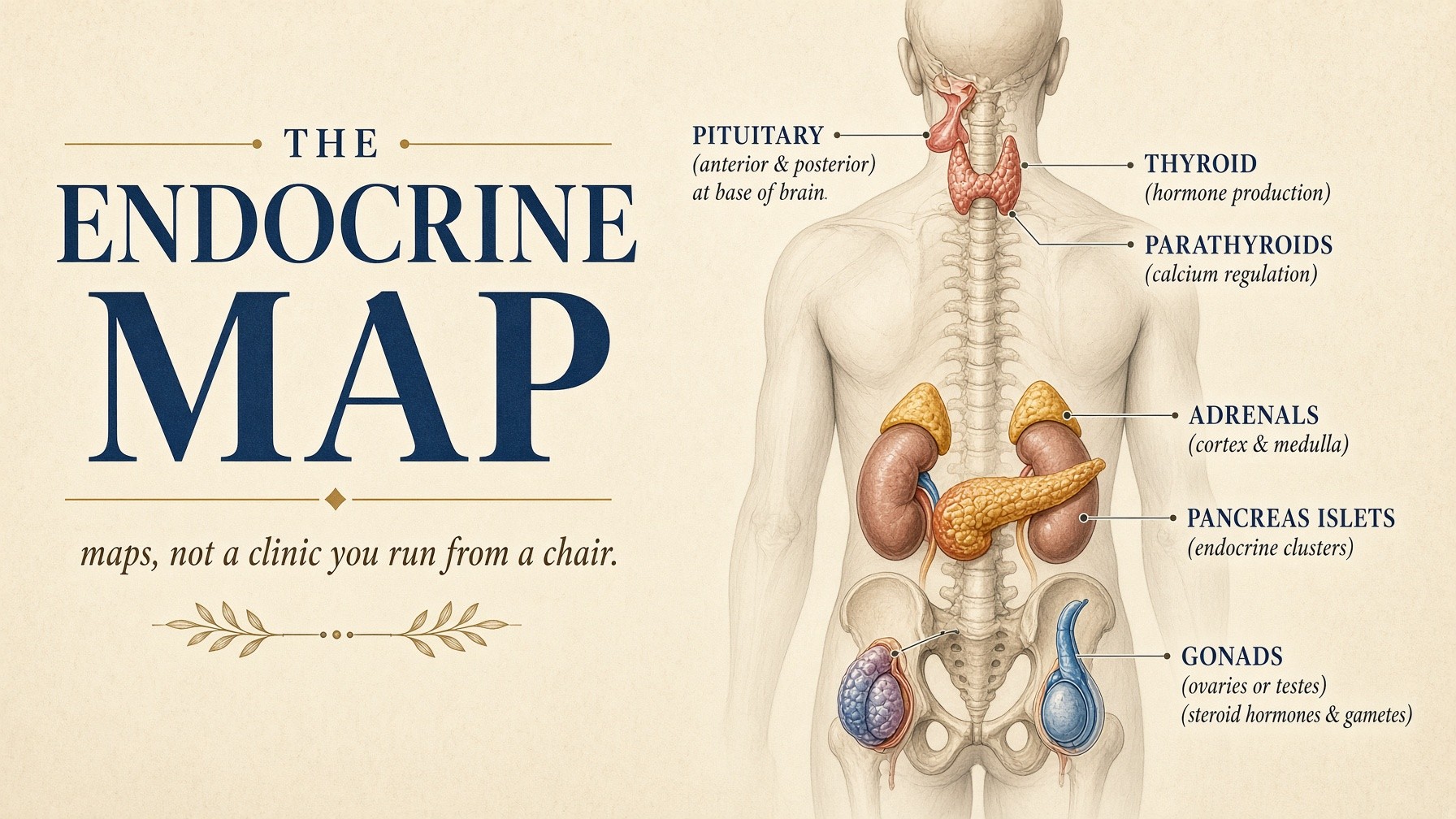
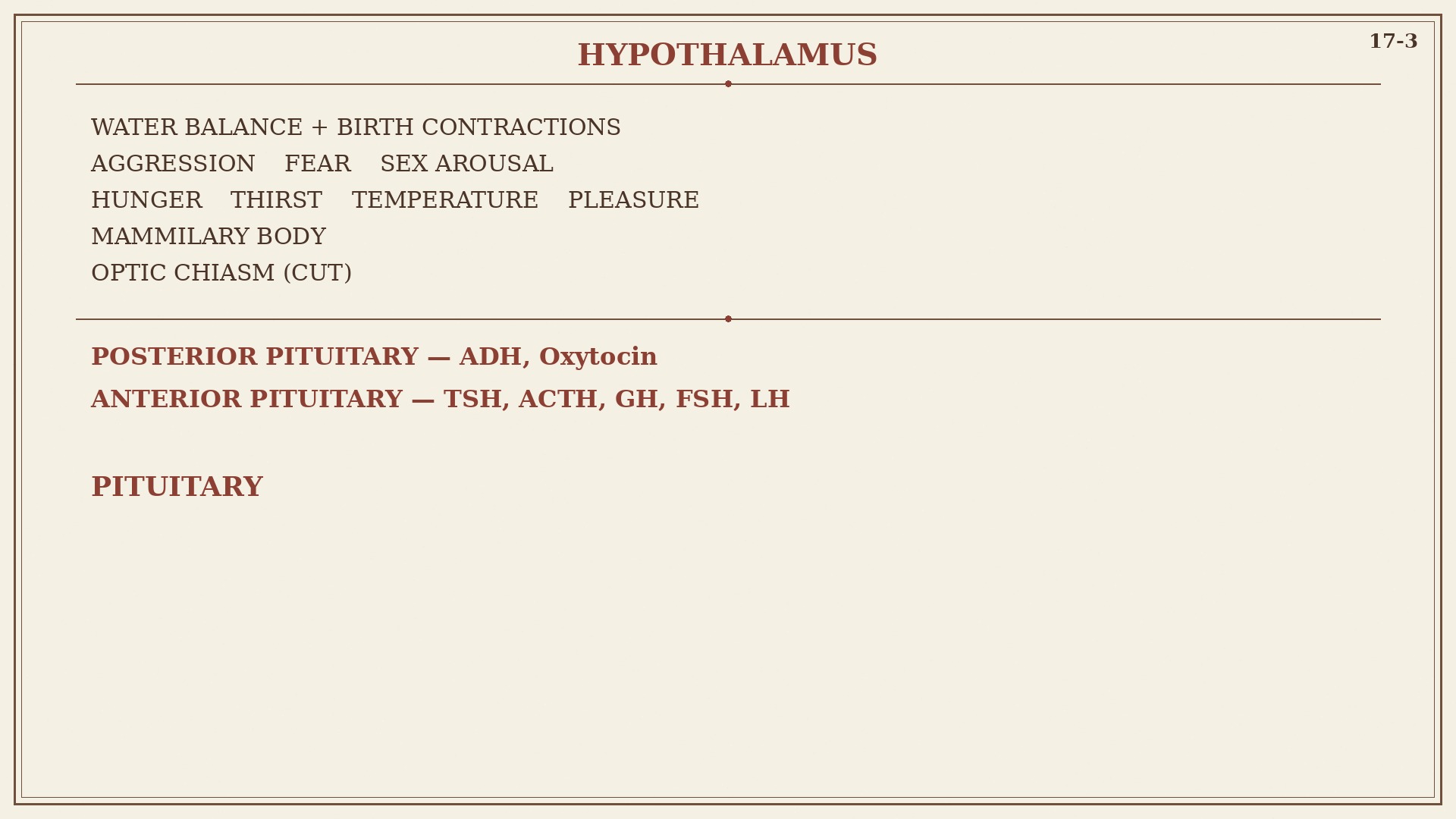
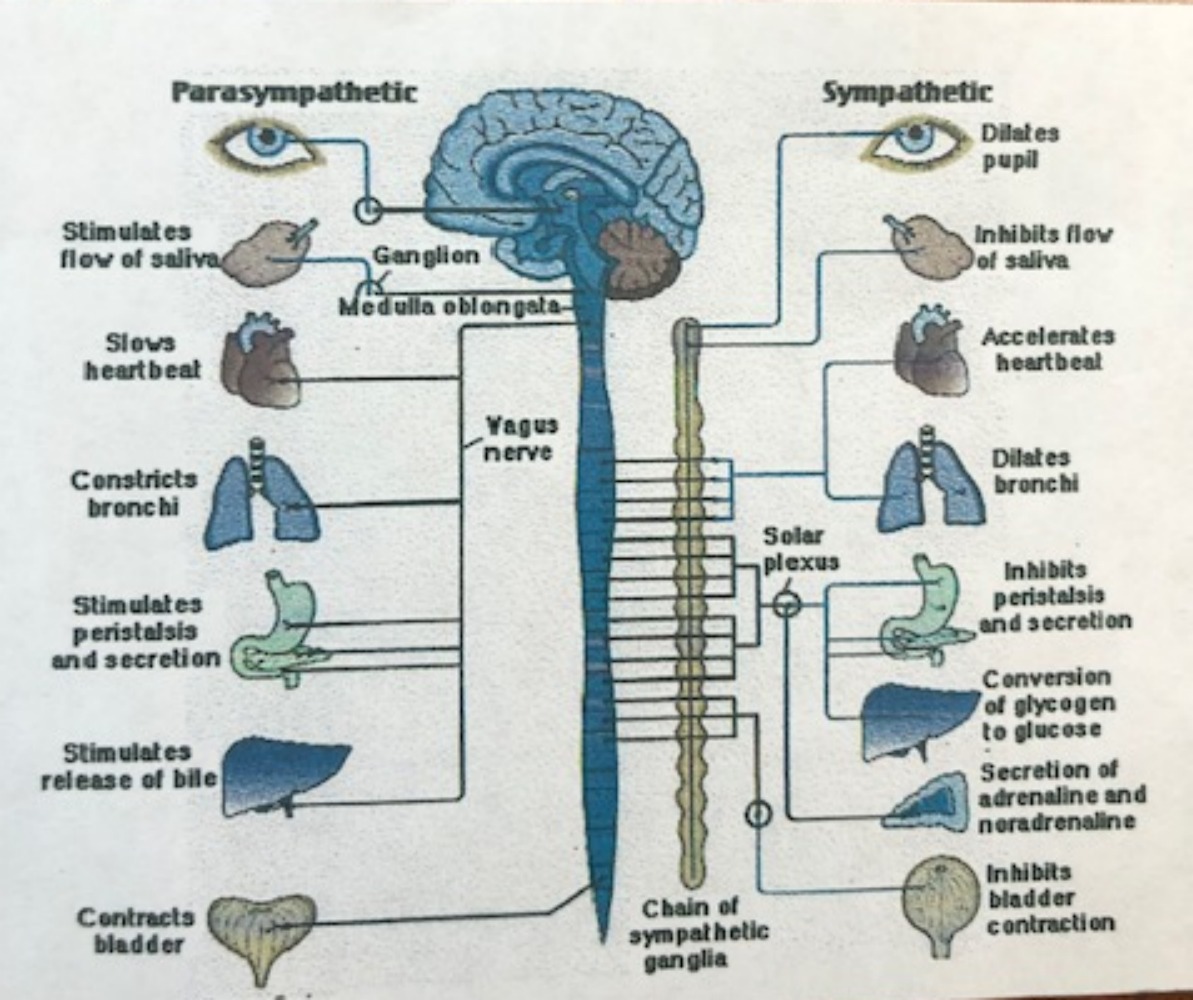
Not a gland in a neat membrane. A collection of secretory cells and pods, grape-sized, essential for the maintenance of life. Directs the autonomic — sympathetic and parasympathetic, not sympathetic outside the autonomic. Circadian, some metabolic processes, memories. Regulates temperature, appetite, thirst, pleasure, fear, aggression, sexual arousal. Governs the pituitary by neurohumors. The parasympathetic/sympathetic plate stands beside 17-3 so the two faces are named: vagus and rest on one side, solar plexus and go on the other.
Amygdala, then the split
The hypothalamus talks to the amygdala. It modulates uncensored emotional print so the conscious brain can receive it. At that interface the body can split out a charge that should not be assimilated — protection, so the person is not disoriented. Course 01 already taught the split. You do not hunt a part out of a hypothalamic pod. Occupancy is a question. A blow to the head that damaged this cluster belongs with a physician.
Her voice, from the class.
Hypothalamus — a cluster of pods
Practice
Name three pods. Ask whether fear is sitting as a pod or as a meridian. If the body yields, stop.
Check
This hour teaches that a split at the amygdala–hypothalamus door is:
- A parasite you evict
- Protection — a charge held beyond recall so the person is not disoriented ✓
- Proof the pituitary is a tumor
Protection. Course 01. Not a hunt.
You treat a blow to the head that changed thirst or temperature as:
- A pod you prescribe GLA into
- A physician ✓
- A cord you yank
Damage to the hypothalamus by a blow is a door out.
Directs the autonomic on this hour:
- A board you invent without her permission
- Sympathetic and parasympathetic, not sympathetic outside the autonomic ✓
- A name that captures the whole sky
Directs the autonomic — Sympathetic and parasympathetic, not sympathetic outside the autonomic
The pods — keep this:
- Write a dose so the feeling looks finished
- The parasympathetic/sympathetic plate stands beside 17-3 so the two faces are named… ✓
- Collapsing two houses into one word
The parasympathetic/sympathetic plate stands beside 17-3 so the two faces are named: vagus and rest on one…
This hour teaches that:
- A dose you write from a yield
- At that interface the body can split out a charge that should not be assimilated … ✓
- Living against the tide on purpose
At that interface the body can split out a charge that should not be assimilated — protection, so the…
Practice on this hour is to:
- Thyroxine from the medulla
- Ask whether fear is sitting as a pod or as a meridian. ✓
- Inventing a colorful story so the session feels complete
Method before bottle. Trace what the lesson names.
Chart 17-3 on this hour is used as:
- A diagnosis stamp you must write today
- Pods. Optic chiasm. Mammillary body. Anterior and posterior pituitary below. ✓
- A cream you prescribe from the chart
Translator map — Chart 17-3. Not a prescription pad.
Permission on this hour means:
- Skip permission if the chart looks clear
- Ask whether you are all alone in the auric field — leave physician charts to physicians ✓
- Write the taper yourself from the yield
Permission first. Anatomy as translator, not a swap of clothes.
The lab on this hour is for:
- A graded exam that invents the next curriculum
- Feeling and naming what the lesson maps — journal, not a bottle ✓
- A prescription pad for the lab name
Lab is literacy. Not a dose from the yield.
"The pods" here is best treated as:
- A tourist collection of special experiences
- A collection of secretory cells and pods, grape-sized, essential for the maintenance of… ✓
- A rigid diagnosis tool that replaces sleep
Train with the map. Do not invent a second sky.